The Maldives Caught in the Crossfire: Tourism Crisis, Political Turbulence, and a Fragile Economy
By Chrispen Nkosi, The Editor, Continental View | Ground View News
28 June 2026
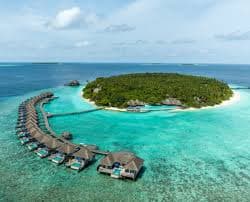
The Maldives, one of the world's most celebrated luxury tourism destinations, enters the second half of 2026 in a condition that its resorts and turquoise waters do not advertise. The country faces a confluence of pressures: a sharp decline in tourist arrivals driven by the Iran-US conflict's disruption to Gulf aviation hubs, an internal political crisis that has produced nightly opposition demonstrations in Malé, and a media freedom environment that has drawn international concern.
Tourism accounts for approximately 28 per cent of the Maldives' GDP and more than 60 per cent of its foreign exchange earnings. What happens when that engine stalls is not an abstract question.
The Tourism Collapse
The data is stark. After modest gains in January and February 2026 relative to the prior year, March saw a 20.7 per cent year-on-year decline in international arrivals, and April recorded a further drop of approximately 25.6 per cent. The primary driver has been flight disruption through Gulf and Middle Eastern hubs, Doha, Dubai, Abu Dhabi, Bahrain, and Kuwait, all of which have been affected to varying degrees by the regional conflict that began on 28 February 2026 with US and Israeli strikes on Iran.
For a country whose resorts depend on wealthy travellers arriving via these very hubs, the disruption has been direct and severe. Qatar Airways suspended services between Doha and the Maldives temporarily, though those flights have since resumed. Travel advisors and tour operators have been recommending that guests with bookings via Gulf hubs monitor airline schedules closely and build buffer nights into their itineraries in case of schedule changes.
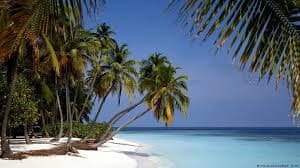
The US-Iran memorandum of understanding signed on 18 June, with its 60-day ceasefire and provision to reopen the Strait of Hormuz, offers the prospect of normalisation in Gulf aviation. But the tentative nature of that agreement, and the drone strike on a cargo vessel in the Strait just eight days after signature, means that the recovery timeline for Gulf air traffic, and therefore for Maldivian resort bookings, remains uncertain.
Political Turbulence Under Muizzu
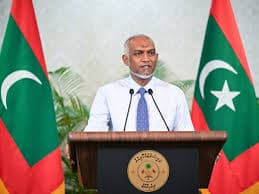
President Mohamed Muizzu faces a domestic political landscape that has grown increasingly hostile. The opposition Maldivian Democratic Party launched nightly demonstrations along the Malé waterfront with twelve demands, and a broader coalition of former presidents Nasheed, Yameen, and Solih has reportedly formed a united opposition front.
Earlier in the year, Muizzu survived an attempted constitutional amendment that would have merged presidential and parliamentary elections, a proposal rejected in a referendum. A criminal court injunction was issued in April prohibiting discussion of a documentary making allegations about a personal affair involving the president, a move that the media freedom organisation Reporters Without Borders noted in its May 2026 Press Freedom Index, in which the Maldives dropped further in its rankings.
On 1 June, Ahmed Saleem was elected Deputy Speaker of the People's Majlis following the resignation of Ahmed Nazim amid an impeachment motion. The political environment in Malé has been characterised by legal manoeuvring, media pressure, and a government facing sustained opposition mobilisation.
The Economic Imperative
The Maldives has no economic cushion against a prolonged tourism downturn. Unlike larger economies that can absorb external shocks through diversification or domestic consumption, the archipelago's 1,200 islands and population of just over half a million people are almost entirely dependent on international visitors.
Debt sustainability has been a concern flagged by international financial institutions. A recovery in Gulf aviation and the broader return of travellers from Europe, India, and Asia is not merely commercially important. It is existentially necessary.
The silver lining, if there is one, is structural. The Maldives offers visa-on-arrival access to virtually every nationality, for stays of up to 30 days. When confidence in Gulf transit returns, the archipelago's capacity to receive visitors quickly is not in question. The question is when that confidence returns and whether the political and economic damage done in the interim can be managed.
Bigger Picture
The Maldives is a vivid illustration of how geopolitical events thousands of kilometres away can determine the fate of small island states with no role in those events. The Iran-US conflict did not begin in Malé. But its consequences closed airspace, disrupted hubs, and cancelled bookings landed there with full force. The world's smallest and most tourism-dependent economies have the least capacity to absorb the shocks created by the conflicts of the powerful.
References
- Travel and Tour World, Maldives Joins Australia, Turkey, UAE, Jordan, Thailand, Greece, and More Countries in Struggling with a Sharp Drop in Tourism Numbers, May 2026
- IM Maldives, Is Maldives Safe to Travel Right Now? Iran-US Flight Update, 15 June 2026
- Visit Maldives, Qatar Airways Confirms Resumption of Doha-Maldives Flights, 2026
- Wikipedia / Wikipedia editorial contributors, 2026 in the Maldives, updated June 2026
- Reporters Without Borders, Press Freedom Index 2026, May 2026
- Arabian Business, UAE Travellers Favour Maldives, Thailand and Europe for Eid Al Adha 2026 Holiday, May 2026
By By Chrispen Nkosi, The Editor, Continental View | Ground View News
Shared 0 times
Editorial note: This article represents the opinion and analysis of the author and does not constitute verified fact. Ground View News strives for accuracy and publishes corrections when errors are identified. View our editorial policy · Editorial disclaimer