Zimbabwe Sits on the World's Most Wanted Mineral.
The US Just Put $300 Million on the Table.
Chrispen Nkosi, The Editor, Continental View | Ground View News
10 July 2026
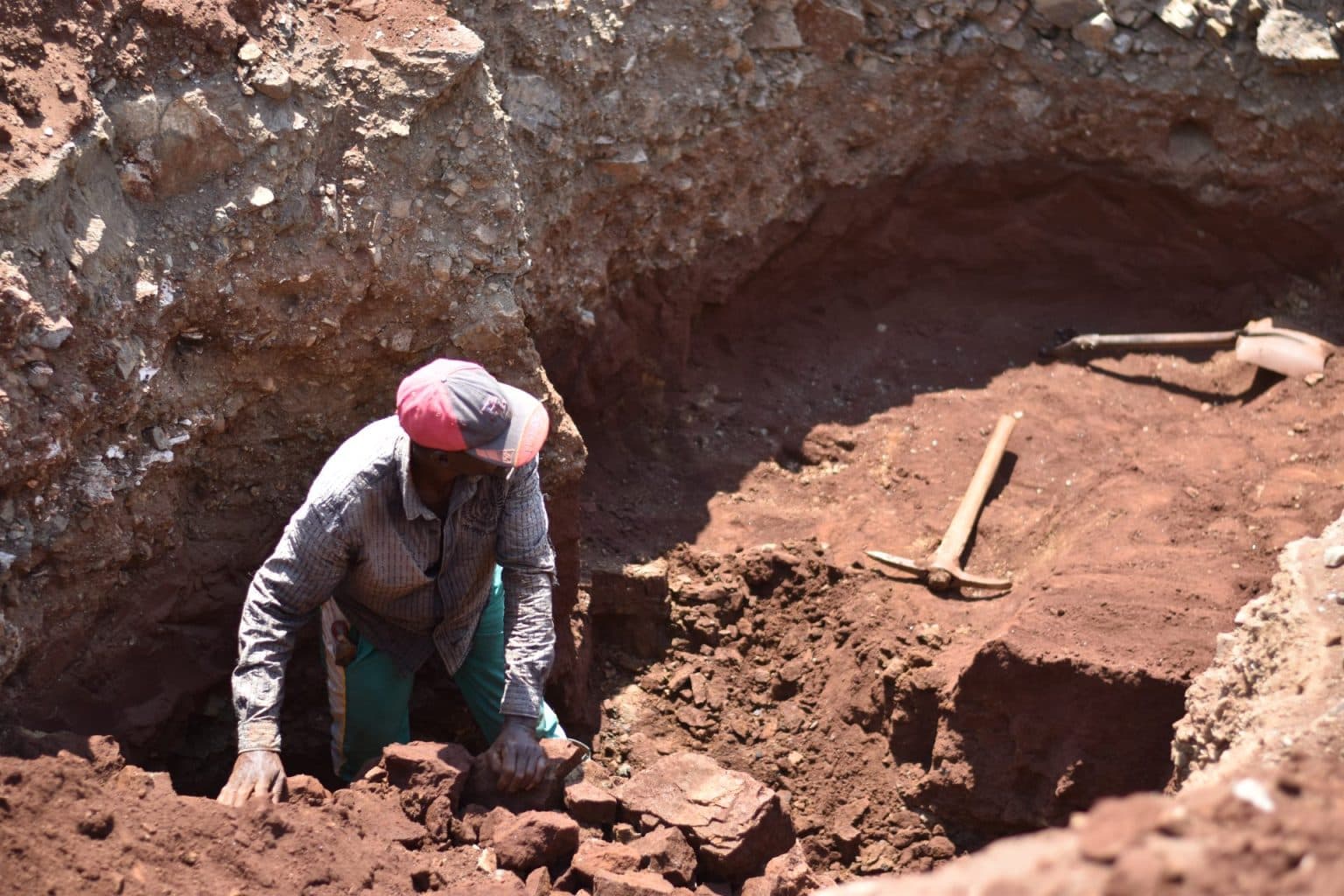
On 2 July 2026, the US Defence Logistics Agency published a procurement solicitation that reframes the global race for critical minerals in terms that no African government can afford to ignore. The agency is seeking fixed-price offers for 35.64 million pounds of battery-grade lithium carbonate, roughly 16,170 metric tonnes, with a combined contract value of up to $300 million over five years. The buyer is the Pentagon. The strategic vehicle is Project Vault, a $12 billion public-private stockpiling initiative established by the White House in February 2026, backed by a $10 billion loan from the US Export-Import Bank and nearly $2 billion in private sector investment.
The timing is not incidental. Global lithium carbonate prices have surged by more than a third in 2026 alone. China controls over 70 per cent of global lithium refining capacity. The war in the Middle East has drained Western munitions stockpiles and reminded defence planners that modern warfare is as much a contest of supply chains as firepower. Washington has concluded that a country dependent on Beijing for the chemistry inside its electric vehicles, grid storage systems, and advanced military hardware is a country with a structural vulnerability. The $300 million lithium solicitation is the opening bid in America's attempt to build a 21st-century strategic reserve, the energy equivalent of the oil reserves that defined 20th-century geopolitics.
For Zimbabwe, this matters more than almost anywhere else on the planet.
Africa's Lithium Powerhouse
Zimbabwe is not simply a lithium producer. It has become, with speed that surprised many analysts, one of the world's most significant ones.
The country has become the world's fourth-largest lithium producer in recent years, according to US Geological Survey data, with output of 28,000 metric tonnes of contained lithium in 2025, up sharply from 20,000 metric tonnes in 2024. Zimbabwe currently accounts for approximately 9 per cent of global lithium supply, according to Benchmark Mineral Intelligence. Its reserves are the largest on the African continent and among the highest-grade deposits anywhere in the world.
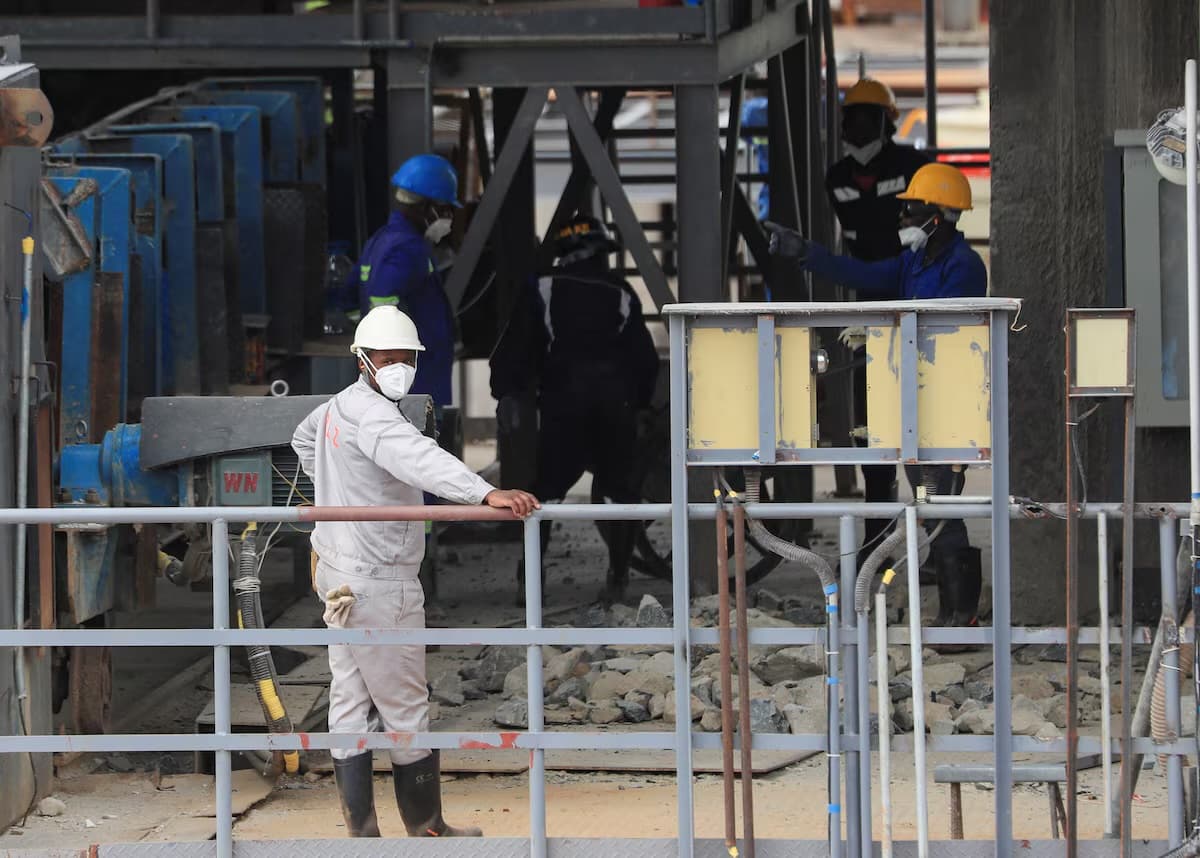
The investment has been almost entirely Chinese. Zhejiang Huayou Cobalt spent $422 million acquiring the Arcadia lithium project near Harare in April 2022, then committed a further $300 million for a 400,000 tonne-per-year lithium concentrate plant and subsequently $400 million more in a lithium sulphate processing facility, completed in 2025. Sinomine Resources Group acquired the Bikita lithium mine for $180 million in January 2022 and spent an additional $300 million on expansion before announcing a planned $500 million smelter. Chengxin Lithium Group and Canmax Technologies paid $77 million for the Sabi Star mine in 2021, then invested $130 million in development and concentrator construction.
The aggregate picture: Zimbabwe's lithium sector has attracted more than $3.4 billion in total investment, with an additional $1.45 billion in projects coming online. Mineral export revenue grew from $5.9 billion in 2024 to an estimated $6.2 billion in 2025, with the sector expanding by 7 per cent in 2025 and 10 per cent growth projected for 2026. Total mineral export earnings surged by 57.4 per cent in the first quarter of 2026 alone, reaching $2.37 billion, with lithium exports more than doubling year-on-year.
Harare's mineral wealth is no longer theoretical. It is producing, shipping, and generating revenue at scale.
The Export Ban Changes the Calculus
Then, on 25 February 2026, Zimbabwe's Minister of Mines and Mining Development, Polite Kambamura, announced with immediate effect the suspension of all exports of raw minerals and lithium concentrates. The ban covered everything in transit. Border officials were instructed to halt clearance. The move accelerated a deadline that had originally been set for January 2027 and applied the restriction to the full mineral export pipeline, not just new shipments.
The stated rationale was the discovery of mineral stockpiles at the Port of Beira in Mozambique, evidence of a smuggling pipeline that was moving Zimbabwean ore out of the country without adequate declaration or valuation. A government letter to Zimbabwe's Chamber of Mines, days before the public announcement, warned of "continued malpractices during the exportation of minerals" and signalled that a broader realignment was coming.
The structural intention was already clear. Zimbabwe's Vision 2030 framework has long targeted the transition from raw mineral exporter to industrial processor. The 2022 ban on raw lithium ore, the subsequent development of a tiered export tax penalising unprocessed material at 10 per cent, and the 2025 announcement of a concentrate export ban from 2027 were all steps in the same direction. The February 2026 acceleration compressed the timeline but did not change the destination.
The immediate effect on markets was sharp. Lithium prices jumped following the announcement. China, which takes in over 90 per cent of Zimbabwe's mineral exports, was the most exposed counterparty. At a stroke, Zimbabwe removed from the market 1.128 million metric tonnes of lithium-bearing spodumene concentrate that it had exported in 2025, up 11 per cent from the previous year and replaced that flow with uncertainty.
In April 2026, Prospect Lithium Zimbabwe, operating the Arcadia mine, became the first facility on the African continent to export domestically processed lithium sulphate. That single shipment was more than a commercial milestone. It was proof of concept for the entire beneficiation strategy.
Where America Enters
It is against this backdrop that the Pentagon's $300 million procurement solicitation lands.
The US Defence Logistics Agency is seeking battery-grade lithium carbonate, not raw ore, not concentrate, but processed material ready for use in manufacturing. The solicitation is part of Project Vault, which operates on a demand-led model: original equipment manufacturers identify specific grades and volumes they need and pay commitment fees to secure emergency access. Market analysts have described the initiative as Washington's attempt to replicate the 20th-century model of strategic petroleum reserves for the 21st-century energy transition.
Howard Klein, co-founder and partner at RK Equity, told the Investing News Network: "The goal of a strategic lithium reserve is to stabilise prices and allow the industry to develop. If prices fall too low, the reserve would step in as a buyer. If prices spike too high, it could sell into the market."
The paradox is that the US, in seeking to reduce dependence on China for critical minerals, has limited domestic refining infrastructure and is largely forced to source processed, battery-ready materials from whoever can supply them. Zimbabwe, as it develops its lithium sulphate and lithium carbonate processing capacity, is building precisely the kind of output Washington needs.
The removal of US sanctions on Zimbabwe in March 2024 cleared the formal diplomatic pathway. What follows from the Pentagon's solicitation is an implicit market signal: Zimbabwe's lithium, if processed domestically and certified to battery-grade specification, has a new buyer that is not Chinese.
That is a significant shift in the geopolitical architecture around Zimbabwe's most valuable resource.
The Chinese Dependency Problem
The tension here cannot be glossed over. Zimbabwe has built its lithium sector almost entirely on Chinese capital and Chinese offtake relationships. Zhejiang Huayou Cobalt, Sinomine, Chengxin Lithium, Canmax Technologies, and Yahua collectively represent the dominant investor class across Zimbabwe's lithium operations. China accounts for over 90 per cent of Zimbabwe's mineral export destinations.
When Zimbabwe imposed the export ban in February 2026, it was China that bore the immediate commercial disruption. The Chinese government has signalled to its entities to reassess the regulatory risk environment. Some analysts interpret the February ban as, at least in part, a signal to Beijing: Zimbabwe is no longer a passive supplier that can be managed through investment relationships alone.
Modern Diplomacy analyst Esther Sit noted the timing of a parallel development: China announced a zero-tariff policy for 53 African nations, including Zimbabwe, effective May 2026, shortly after the export ban was imposed. "At first glance, these two policies may appear unrelated: one restricts exports, the other eases imports. However, when we consider them carefully, they begin to look more like an alignment. Zimbabwe is moving to capture more value, while China is ensuring its long-term resource access. Both countries are adjusting their positions within the same global supply chain, but from opposite ends."
This is resource diplomacy operating at its most sophisticated. Zimbabwe is not severing ties with China. It is renegotiating the terms. If Chinese companies want continued access to Zimbabwean lithium, they will need to process it locally, pay more for it, and operate within a regulatory environment that demands greater value capture for the Zimbabwean state and its citizens.
The entry of US demand into this picture adds a third dimension. It does not automatically displace China. But it changes Zimbabwe's negotiating position with everyone.
The Infrastructure Problem Has Not Gone Away
Clarity requires acknowledging what is not yet working.
The beneficiation policy is, at its core, an industrial policy. And industrial policy in Zimbabwe is constrained by the same structural problem that has limited every previous attempt at economic transformation: electricity.
Power cuts have repeatedly disrupted mining operations, making it difficult to invest in energy-intensive processing facilities. Lithium sulphate production, smelting, and downstream chemical processing require reliable, affordable, large-scale power. Zimbabwe's national grid has not historically been able to provide it.
Some of the Chinese investors have moved toward captive power generation within their operating sites. Zhejiang Huayou Cobalt's Arcadia facility has built dedicated power infrastructure. But this is not a systemic solution. A country that wants to become a midstream lithium processor at scale cannot do it mine-by-mine. It needs grid-level capacity.
The African Climate Wire noted a critique that applies across the continent: many African countries are pushing for local beneficiation without adequately addressing structural constraints such as unreliable electricity supply, water shortages, skills shortages, and limited processing technologies. A study by the Natural Resources Governance Institute found that Ghana could lose $500 million in revenue if it pursued domestic lithium processing, suggesting that building competitive processing capacity is not always economically viable without accompanying infrastructure investment.
Zimbabwe's Lithium Producers' Association has formally requested an extension of the January 2027 concentrate export ban deadline to June 2027, because building a lithium sulphate processing plant typically takes two to four years under favourable conditions, and the acceleration of the ban caught several operators mid-construction. As of mid-2026, Sinomine's Bikita Minerals lithium sulphate plant is under construction but not yet operational. Sichuan Yahua's Kamativi plant is underway. A state-owned mine remains at feasibility study stage.
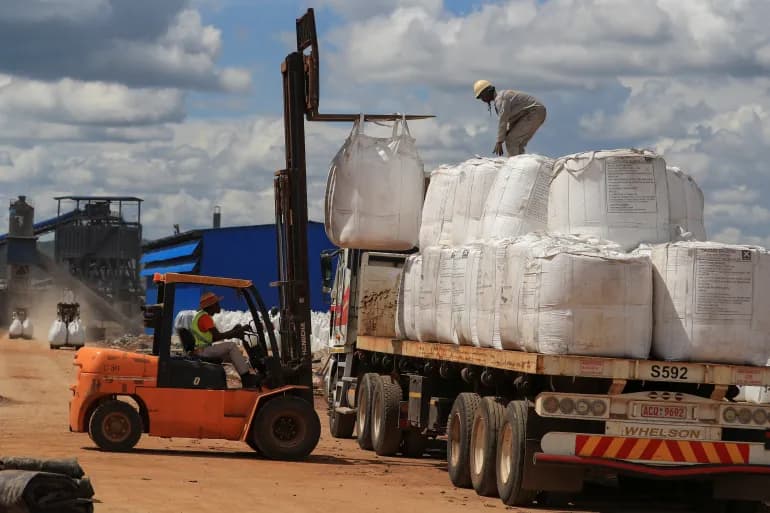
The gap between ambition and operational readiness is real. The policy is moving faster than the infrastructure in some cases.
What the $300 Million Signal Means for Africa
The Pentagon solicitation is about lithium carbonate specifically. But it is part of a much larger American repositioning on critical minerals that has direct implications for the continent as a whole.
Project Vault's $12 billion commitment, backed by the US Export-Import Bank, is not solely a purchasing programme. It is a signal to the market that the US is prepared to underwrite supply chain diversification away from China. That creates an opening for African mineral producers in lithium, but also in cobalt (DRC), manganese (Gabon, Ghana), graphite (Tanzania, Mozambique), and rare earth elements across multiple jurisdictions to engage with Western capital and off-take arrangements at a level that was not available five years ago.
The broader pattern is already visible. Thirteen African countries have introduced export restrictions, bans, or beneficiation requirements on critical minerals. Namibia, Botswana, Ghana, Nigeria, Tanzania, and the DRC have all moved in similar directions to Zimbabwe. Malawi joined the group in 2025, banning all raw mineral exports. The African Union's Africa Mining Vision has long argued for a shift from upstream extraction to midstream and downstream value capture. What is changing now is that global demand conditions driven by the energy transition, the China-US rivalry for supply chain control, and the defence requirements of major military powers are creating the market incentives to make that strategy commercially viable.
Zimbabwe's lithium story is the furthest advanced example of what that transition looks like in practice. The sector has survived a catastrophic price collapse from a peak of approximately $86,000 per tonne in 2022 to around $14,300 at the trough and is now seeing prices stabilise between $22,000 and $25,000 per tonne, with a 2026 recovery driven in part by Western stockpiling interest.
The country's lithium production is projected to rise to roughly 160,000 metric tonnes of lithium carbonate equivalent per year by 2030. The sector is projected to generate $3.2 billion in annual turnover by that year, based on lithium sulphate exports in compliance with the beneficiation policy. If the long-term mineral export trajectory of $21 billion annually is achieved, mining will have been the engine of an economic transformation that changes Zimbabwe's position in the regional and global economy.
That trajectory now has a new actor in the room. The US has signalled, through Project Vault and the Pentagon solicitation, that it is willing to pay for processed lithium from wherever reliable supply can be secured. Zimbabwe is building exactly that capacity.
Commentary: The Opportunity and the Test
This is the moment Zimbabwe has been building toward, deliberately or otherwise, for the past four years. The export ban is forcing Chinese investors to process locally. The first African lithium sulphate shipment has left Harare's Arcadia mine. The US is in the market for exactly what Zimbabwe is beginning to produce. Prices are recovering. Investment is at $3.4 billion and rising.
The opportunity is real. The test is whether Zimbabwe's government can hold a course that requires regulatory consistency, infrastructure commitment, and the capacity to manage a dominant Chinese investor base and growing Western interest simultaneously without allowing political instability, policy reversal, or elite capture of the sector's revenues to undercut the fundamentals.
Boston University's Global Development Policy Centre, in a substantive March 2026 analysis, put the governance challenge plainly: without coherent industrial policy, infrastructure investment, and stronger regulatory oversight, the export ban risks creating uncertainty for investors while doing little to change the underlying dynamics of extractive development. The policy adds one processing step to the chain. It does not, by itself, guarantee that Zimbabwe captures the downstream manufacturing value, the employment, or the fiscal revenue that would make the transition transformational rather than merely symbolic.
Zimbabwe's lithium economy is, right now, at an inflexion point. The US has just demonstrated that the geopolitical demand exists. The pricing conditions support investment. The regulatory architecture is moving in the right direction, even if implementation is uneven. What happens next depends on decisions in Harare on energy infrastructure, on regulatory consistency, on the quality of the deals struck with both Chinese and Western partners, and on whether the revenue generated is channelled into the broader economy or absorbed by a narrow tier.
The world's most powerful military has just put $300 million on the table for the mineral Zimbabwe has in abundance. That is nothing. What Zimbabwe makes of it is the only question that matters.
Related Reading
- US Pentagon's $300 Million Lithium Stockpile Investing News Network
- Zimbabwe's Lithium Export Ban Al Jazeera
- Zimbabwe Mining Investment Rising and Extends Beyond Lithium Mining Weekly
- Zimbabwe's Lithium Pivot: Promises and Pitfalls Boston University Global Development Policy Centre
- Export Restrictions on Critical Minerals African Climate Wire
- Zimbabwe's Lithium Export Ban: China's Battery Supply Chain in an Era of Resource Nationalism Modern Diplomacy
- Zimbabwe Mineral Export Earnings Surge 57% to US$2.37bn Mining Zimbabwe
Footnotes
- US Defence Logistics Agency procurement solicitation, July 2, 2026 - sam.gov
- Zimbabwe Ministry of Mines and Mining Development, Press Statement on Ban of Export of Raw Materials and Lithium Concentrate, February 2026
- Reuters, "Zimbabwe bans exports of all raw minerals and lithium concentrates, cites malpractices," February 25, 2026
- Bloomberg, "Lithium Prices Jump After Zimbabwe Bans Concentrate Exports," February 26, 2026
By Chrispen Nkosi, The Editor, Continental View | Ground View News
Shared 0 times
Editorial note: This article represents the opinion and analysis of the author and does not constitute verified fact. Ground View News strives for accuracy and publishes corrections when errors are identified. View our editorial policy · Editorial disclaimer
Related Articles

Jeremy Clarkson, Gucci and the Home Race: Alpine's British Grand Prix Story Runs Deeper Than the Grid
Formula 1 has become a platform valuable enough to attract fashion houses, and personal enough that a television presenter's loyalty to his local team still makes headlines.