Zimbabwe's minerals, Zimbabwe's rules: the export ban reshaping a sector
That arrangement is now over. Or at least, the government intends it to be.
Chrispen Nkosi
9 May 2026
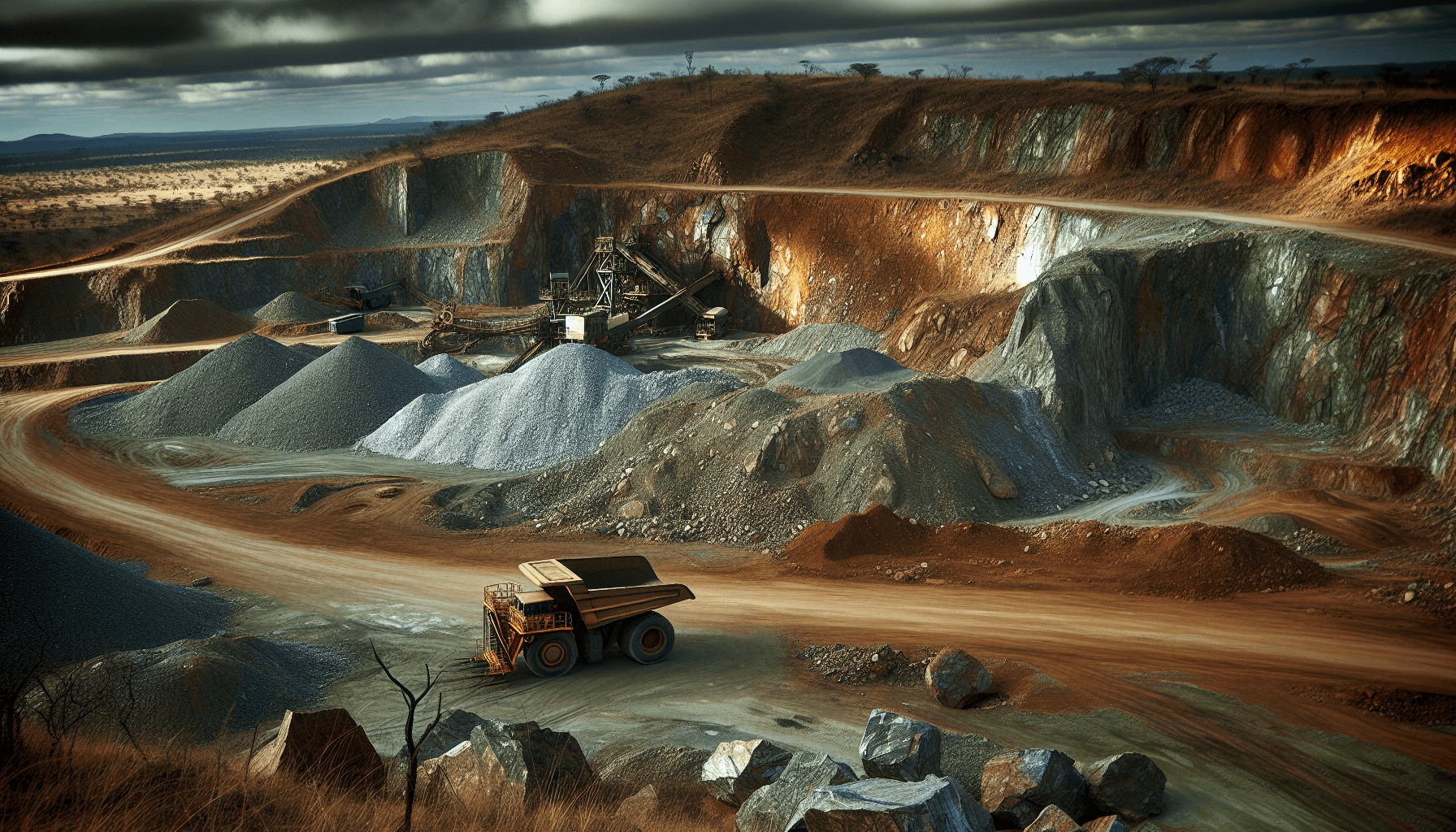
Zimbabwe sits on some of the most valuable ground on earth. It holds Africa's largest lithium reserves, significant platinum group metals, gold, chrome, and diamonds. For decades, the country extracted that wealth and shipped it abroad, raw, undervalued, and under-taxed, while processing, manufacturing, and profit margins happened elsewhere.
That arrangement is now over. Or at least, the government intends it to be.
On 25 February 2026, Minister of Mines Polite Kambamura announced an immediate suspension of all raw mineral exports and lithium concentrate shipments, with no end date specified. The trigger was a discovery that forced the issue into the open: Zimbabwean mineral ore had been found stockpiled at the Port of Beira in Mozambique, high-value, multi-mineral rock being falsely declared as low-grade single-mineral waste to bypass export controls and tax obligations.[1] President Mnangagwa ordered an investigation. The ban followed within weeks.
The scale of what had been happening is not trivial. Smugglers were exploiting Zimbabwe's complex geology, where a single consignment declared as lithium ore could contain tantalum, tin, and rare earth elements, to move billions in undeclared value across the border.[2] The Zimbabwe Revenue Authority and the Minerals Marketing Corporation of Zimbabwe have now been directed to block all shipments lacking valid permits from government-approved, title-holding mining companies. Middlemen and traders are out entirely.
The broader context matters. Zimbabwe had already banned raw lithium ore exports in 2022, and had announced a ban on lithium concentrate exports due to take effect in January 2027. The February ban accelerated that deadline by nearly a year and extended it to all minerals.[3] It is part of a continental pattern: at least 13 African countries have now introduced export restrictions, bans, or beneficiation requirements on critical minerals, from the DRC to Namibia to Malawi.[4]
The ambition is legitimate. By April, the government had replaced the blanket ban with a quota-based system, individual export permits tied to demonstrated processing capacity, a 10 per cent interim tax on compliant shipments, and a hard deadline of January 2027 for full domestic processing requirements.[5] Huayou Cobalt's $400 million lithium sulphate plant, already operational, is exactly the kind of investment the policy is designed to incentivise.[1]
The risks, however, are real. Zimbabwe's power supply remains unreliable, its processing infrastructure is underdeveloped, and research by the Natural Resources Governance Institute has shown that domestic processing can cost more than exporting concentrate to established industrial ecosystems, particularly China's.[4] Mining industry confidence has improved in 2026, with mineral revenue projected to reach $7.5 billion and gold deliveries up 8.29 per cent in the first quarter.[6][7] But executives remain pessimistic about the fiscal environment and access to foreign currency constraints that no export ban can resolve on its own.[6]
Zimbabwe has the minerals. What is being built now is the governance architecture to match. Whether it holds against smuggling syndicates, infrastructure gaps, and investor uncertainty will determine whether this moment becomes a turning point or another cycle of ambition without delivery.
Sources:
[1] Al Jazeera, "Zimbabwe imposes ban on exports of all raw minerals and lithium concentrate," 25 February 2026, aljazeera.com
[2] The Zimbabwean, "Caught red-handed, Government finally explains why it had to ban all raw mineral and lithium exports," 1 March 2026, thezimbabwean.co
[3] McCarthy Tétrault, "Zimbabwe's Lithium Export Ban," March 2026, mccarthy.ca
[4] African Climate Wire, "Export Restrictions on Critical Minerals: What Zimbabwe's Recent Ban Tells Us," 18 March 2026, africanclimatewire.org
[5] Discovery Alert, "Zimbabwe Lithium Export Ban Lifts with Strict Rules 2026," April 2026, discoveryalert.com.au
[6] Mining Zimbabwe, "Zimbabwe's Mining Industry Poised for Robust Growth in 2026, Survey Reveals," November 2025, miningzimbabwe.com
[7] Mining Zimbabwe, "Zimbabwe Q1 2026 Gold Performance," May 2026, miningzimbabwe.com
By Chrispen Nkosi
Shared 0 times
Editorial note: This article represents the opinion and analysis of the author and does not constitute verified fact. Ground View News strives for accuracy and publishes corrections when errors are identified. View our editorial policy · Editorial disclaimer