David Against Goliath in Miami: What Argentina vs Cape Verde Really Shows Us About the Gap in World Football
Cape Verde's squad tells a different story.
Chrispen Nkosi, The Editor, Continental View | Ground View News
4 July 2026
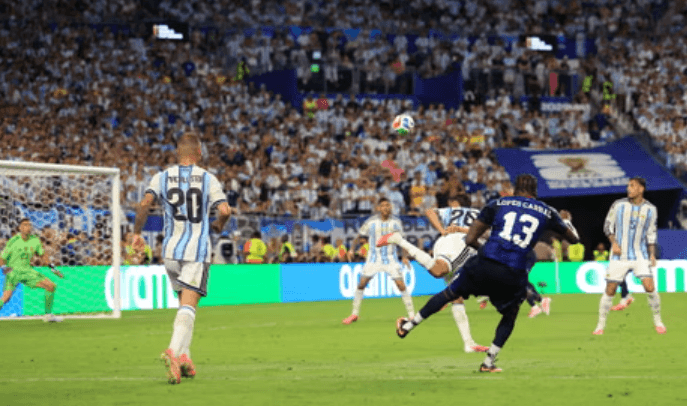
Argentina and Cape Verde could not be further apart on paper. One is the reigning World Cup champion, ranked number one in the world, chasing a piece of history that only Brazil has managed before. The other is a nation of roughly 500,000 people playing in its first-ever World Cup, ranked 67th, and already the smallest country to reach the knockout stage of the tournament. That gap is exactly what makes the contest in Miami worth examining beyond the scoreline.
Two Different Routes to the Same Stadium
Argentina arrived at this round of 32 tie unbeaten in ten straight matches, having won every group game and conceded nothing along the way. Their path here was built on control: dominant possession, a settled system around Lionel Messi, and a squad stacked with players from Europe's biggest clubs.
Cape Verde's route looked nothing like it. The Blue Sharks drew all three of their group games, 0-0 against Spain, 2-2 against Uruguay, and 0-0 against Saudi Arabia, and still went through. That record was not the product of caution alone. It reflected a team built to survive against opponents with far bigger squads, deeper benches, and far larger footballing infrastructures behind them. Where Argentina's route was about imposing a plan, Cape Verde's was about absorbing pressure and making the most of the moments that came their way.
A Squad Gap That Shows on the Team Sheet
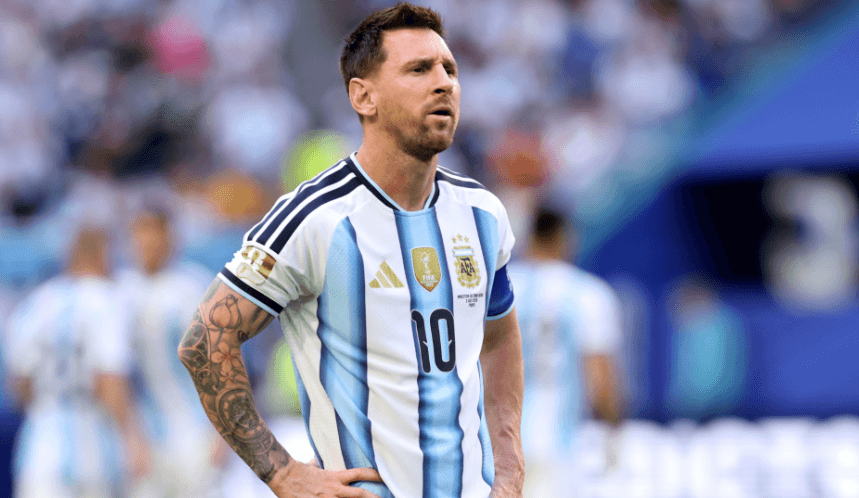
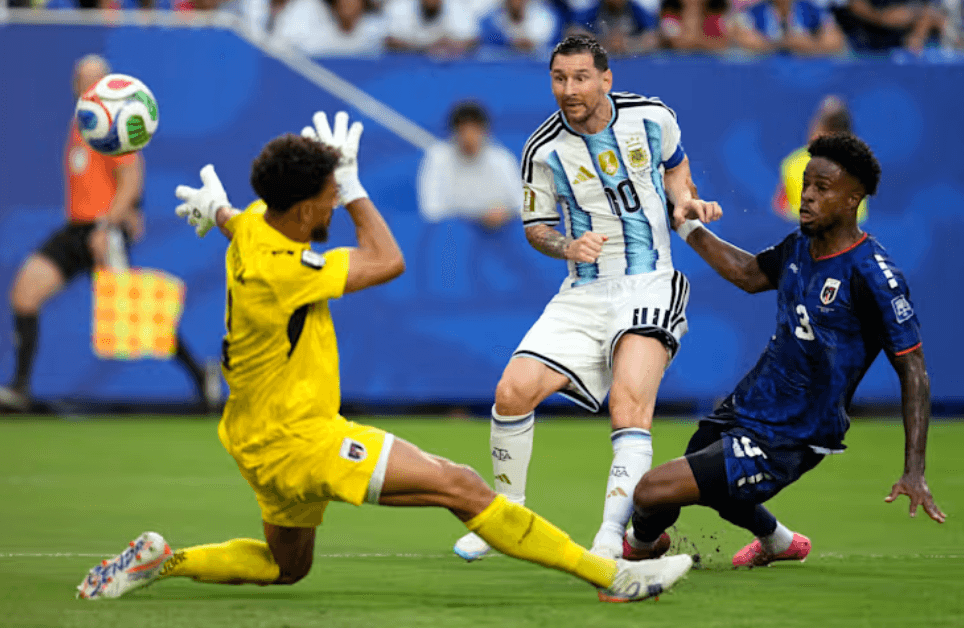
Argentina's starting line-up in Miami reads like a Champions League roster: players from Manchester City, Inter, Atletico Madrid, and other major European clubs, most of them regulars for sides competing at the top of their domestic leagues. Messi himself is playing in his fifth World Cup, a record 30th appearance at the tournament, and remains one of the smallest number of players on the planet capable of deciding a game from nothing, as his 29th-minute goal in this match showed once again.
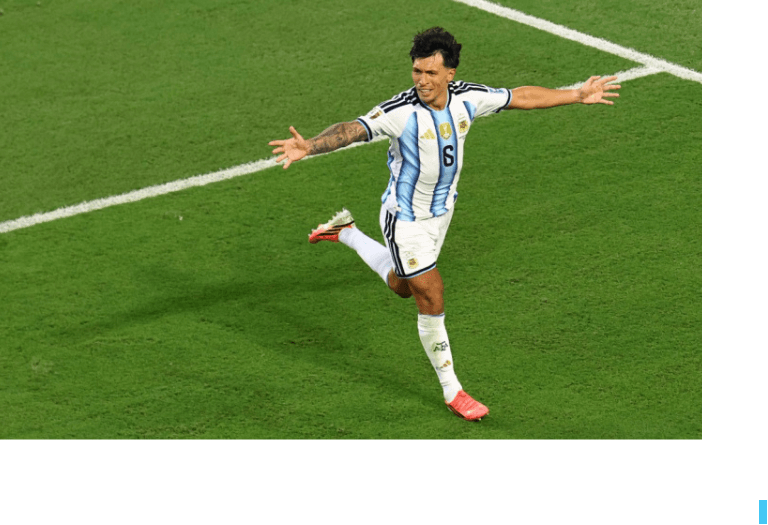
Cape Verde's squad tells a different story. Several of their players are based in lower divisions across Europe or in domestic Cape Verdean football, and their side is built around unusually strong individual performances rather than strength in depth. Goalkeeper Vozinha, at 40 years old, has been the single biggest reason Cape Verde have got this far, and his display against Argentina, multiple saves against Messi included, has been as much a personal story as a national one.
Styles That Do Not Belong in the Same Bracket
Football-wise, these two teams do not resemble each other at all. Argentina play with intent to control the ball and dictate territory, built around quick combinations through midfield and Messi's ability to find pockets of space. Cape Verde have played almost the opposite way throughout the tournament: a compact, disciplined low block designed to deny space, with quick transitions on the counter as their main route to goal.
That contrast played out directly in this match. Argentina had the better of possession and created the more clear-cut chances across normal time and extra time. It was that pressure that eventually told again when Cristian Romero put them 3-2 up in the 111th minute. Cape Verde's answers came from set pieces and moments of individual quality, Deroy Duarte's turn-and-finish for the equaliser and Sidny Lopes Cabral's long-range strike in extra time among them, rather than sustained periods of control. Two very different footballing philosophies, produced by two very different footballing systems, have taken four different goalscorers and a scrambled fifth to separate them, with Cape Verde now needing another response in the closing minutes to take the tie to penalties.
Why the Gap Matters More Than the Scoreline
None of this is a knock on either team. It is the point of the contrast. Cape Verde's federation, resources, and player pool are a fraction of Argentina's. Yet, a match that many expected to be a formality has gone to extra time and is heading towards penalties. That is not an accident of one good day. It reflects genuine organisation, coaching, and resilience built over a qualifying campaign that took Cape Verde past far larger footballing nations to reach this tournament in the first place.
For Argentina, the gap in resources has bought margin for error rather than a guarantee of victory. Individual quality, spread across Messi, Lisandro Martinez, and now Cristian Romero, has been the difference-maker so far, but it has taken three separate matchwinners and 111 minutes to get there against a team with a fraction of Argentina's playing budget and international experience.
Bigger Picture
This tie is a useful marker for where football's global balance sits going into the second half of this decade. The 48-team World Cup format has been criticised in some quarters for diluting the quality of the group stage, but it has also created more room for nations like Cape Verde to prove that the gap between football's traditional powers and its smaller federations is not as fixed as it once looked. Whatever the final result in Miami, Cape Verde have already shown that a fraction of Argentina's resources, squad depth, and footballing infrastructure does not mean a fraction of their competitiveness on the day.
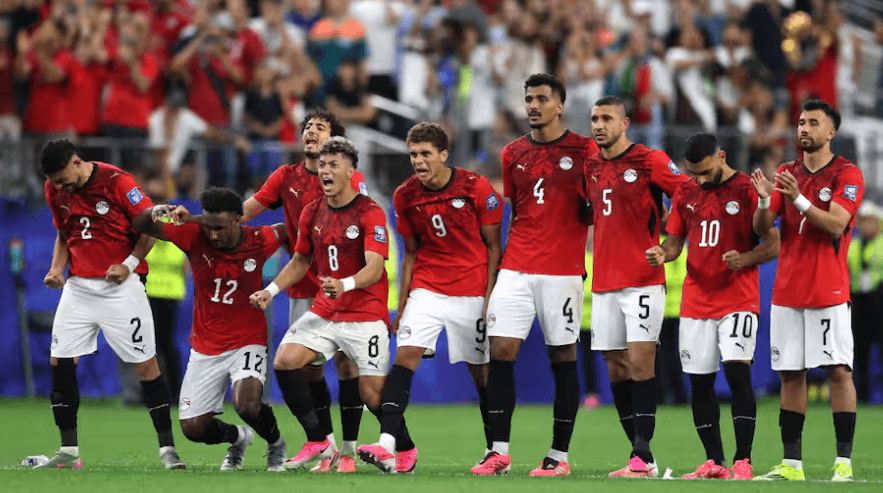
For African football specifically, this match sits alongside Egypt's win over Australia earlier on the same day as evidence of a continent producing sides capable of matching bigger, wealthier football nations on the biggest stage, even when the underlying numbers, population, budgets, and league depth suggest they should not be able to.
Sources
- NBC Sports, "Argentina vs Cape Verde live updates: Lionel Messi and the world champs continue repeat pursuit," July 3-4, 2026.
- Outlook India, "Argentina 2-2 Cape Verde LIVE Score, FIFA World Cup 2026: Cabral Nets Sensational Stunner To Equalise Again," July 3-4, 2026.
- FOX Sports, "Argentina-Cape Verde's World Cup Match Is The Best TV Show Of The Summer," July 2-3, 2026.
- ClickOnDetroit/AP, "Argentina and Cape Verde head to extra time at World Cup after ending regulation tied at 1-1," July 3-4, 2026.
- Yahoo Sports, "Argentina vs. Cape Verde: Live game updates, stats, play-by-play," July 3, 2026.
- ESPN, "Argentina vs Cape Verde LIVE: World Cup 2026 updates as Romero gives Argentina lead in extra time again," July 3-4, 2026.
- Al Jazeera, "Argentina vs Cape Verde LIVE: FIFA World Cup 2026," July 3, 2026.
By Chrispen Nkosi, The Editor, Continental View | Ground View News
Shared 0 times
Editorial note: This article represents the opinion and analysis of the author and does not constitute verified fact. Ground View News strives for accuracy and publishes corrections when errors are identified. View our editorial policy · Editorial disclaimer
Related Articles

Spain Bring the World Cup Home: La Roja Beat Argentina 1-0 to Claim Second Global Crown
Spain Bring the World Cup Home to Europe
Cape Verde Stun Messi's Argentina Into Extra-Time Thriller as Blue Sharks Chase the Impossible in Miami
The winner advances to face Egypt in Atlanta on July 7, after the Pharaohs beat Australia on penalties earlier on Friday to reach their own first-ever World Cup knockout stage.
Egypt Outlast Australia on Penalties After a 120-Minute War of Attrition to Reach the World Cup Last 16
Egypt now turn their attention to Atlanta and a last-16 tie against either Argentina, the reigning champions, or Cape Verde, the tournament's standout minnows.