Spain Bring the World Cup Home: La Roja Beat Argentina 1-0 to Claim Second Global Crown
Spain Bring the World Cup Home to Europe
Chrispen Nkosi, The Editor, Continental View | Ground View News
19 July 2026
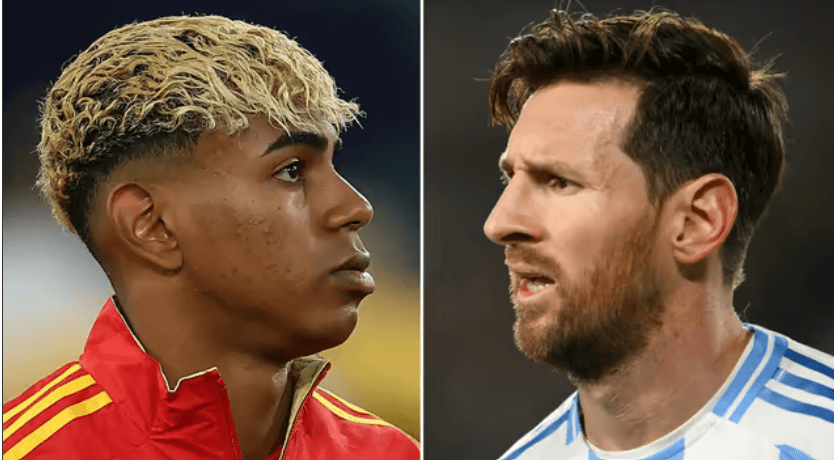
Spain are world champions again. A single goal from substitute Ferran Torres in the 106th minute settled a tense, tightly fought 2026 FIFA World Cup final against Argentina at MetLife Stadium in East Rutherford, New Jersey, closing out a six-week tournament spread across the United States, Mexico and Canada with the trophy returning to Europe for the first time since 2014.
It is Spain's second World Cup title, sixteen years after their 2010 breakthrough in South Africa, and it comes on the back of an unbeaten run through the entire competition. For Argentina, the defeat likely marks the end of Lionel Messi's international career, a second successive final appearance that this time ended in defeat rather than glory.
How the Final Unfolded
The opening exchanges were cagey and low on clear chances. Argentina managed no shots at all in the first half and had no touches inside Spain's penalty area, a striking statistic for a team built around the attacking instincts of Messi and Julián Álvarez.Messi's best opening came in the fifth minute when Álvarez played him through with only goalkeeper Unai Simón to beat, but Simón got there first and cleared the danger. Spain, by contrast, probed patiently through Lamine Yamal and Marc Cucurella without finding a breakthrough, with Cucurella's long-range effort in particular rolling narrowly wide.
Spain's control of the ball became more pronounced as the match wore on. By full time, Spain had dominated territorially, finishing with 65 per cent possession and 20 shots to Argentina's two, with Argentina failing to register a single shot on target across the entire ninety minutes. Argentina's goalkeeper Emiliano Martínez was the difference between a comfortable Spanish win and a match still level after regulation time, repeatedly denying Spain's forwards, including a stoppage-time save from a Yamal free kick that forced the game into extra time.
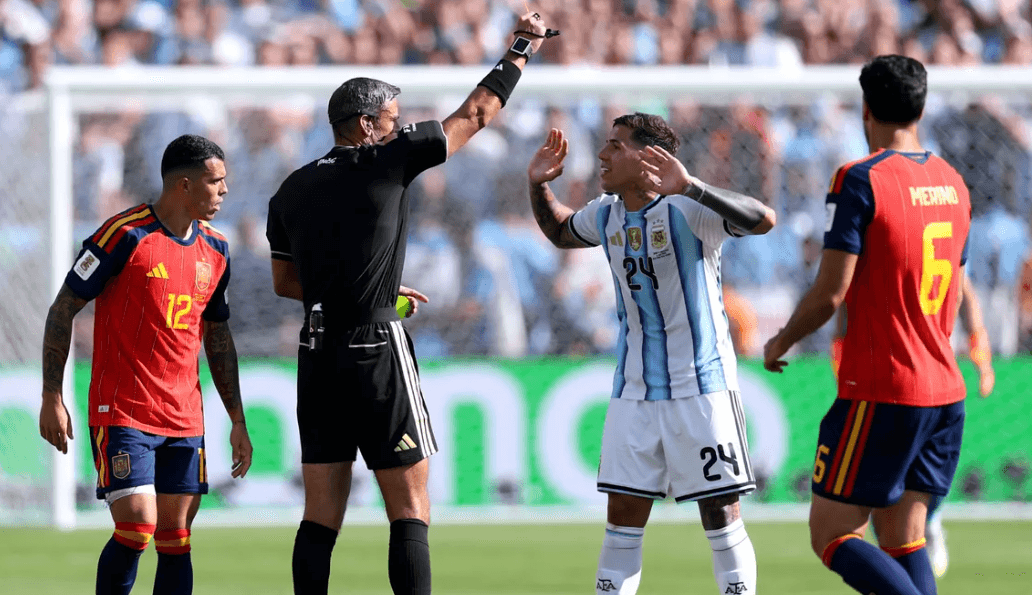
The pivotal moment of the match arrived in stoppage time at the end of the second half, when Argentina midfielder Enzo Fernández was sent off. Fernández had picked up a first yellow card in the 82nd minute for unsporting behaviour after a sequence of fouls, then received a second in the second minute of stoppage time following a heavy collision with Spain defender Pau Cubarsí. Former FIFA referee Darren Cann, working as a pundit, called it "a clear second yellow card" with no argument to be had over the decision. It left Argentina to play the remainder of the match, and all of extra time, with ten men.
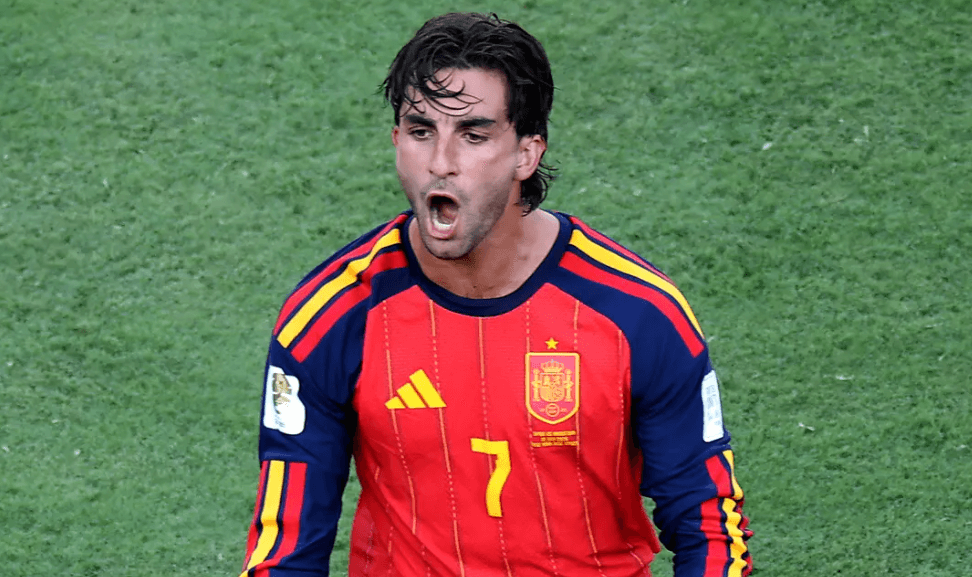
Spain made the numerical advantage count early in extra time. Martín Zubimendi delivered a cross to the far post, Nico Williams headed the ball back across goal, and Ferran Torres arrived unmarked to finish first time and put Spain ahead. The goal, Torres's decisive strike arriving in the 106th minute, proved to be the only one Spain would need. A later Torres effort was ruled out for offside, and Argentina, chasing the game a man short, could not muster a genuine response.
By the closing whistle, the numbers told their own story. Argentina goalkeeper Emiliano Martínez finished with 11 saves, a new World Cup final record, underlining how one-sided the balance of play had been despite the scoreline staying close for so long. Spain's title was built on defensive solidity as much as attacking flair: the team went into the final having conceded only once across the whole tournament, and did not concede at all in the final itself.
Context: A Final Between Two Eras
This was a meeting of generations as much as nations. Messi, at 39, was playing what is widely expected to be his last World Cup, chasing a second title to add to Argentina's triumph in Qatar four years ago. Standing opposite him was 19-year-old Lamine Yamal, already a European champion with Spain and now, on the biggest stage in football, a world champion barely two years into his senior career.
Both sides arrived in New Jersey having survived dramatic semi-finals. Spain eliminated France, beaten finalists in recent tournaments, with a battling display in Arlington, Texas, while Argentina needed a stoppage-time comeback to see off England in Atlanta. England took third place with a wild 6-4 win over France in Miami, in which Bukayo Saka scored a hat-trick.
The final was also a showcase for the expanded 48-team format introduced in this cycle, the first World Cup jointly hosted across three countries. FIFA leaned into the occasion with a star-studded closing ceremony and a first-ever World Cup halftime show, featuring Madonna, Justin Bieber, Shakira and BTS, among other performers, in front of a crowd that included the leaders of the three host nations and the King of Spain.
The Bigger Picture
For Spain, this is validation of a footballing project built patiently over more than a decade, one that has now delivered a European Championship in 2024 and a World Cup in 2026 with largely the same core of young, technically gifted players. Coach Luis de la Fuente leaves this tournament with a squad that dominated territorially in almost every match it played and conceded barely at all, a template other federations will study closely.
For Argentina, the story is more bittersweet. A generation that delivered a World Cup and two Copa América titles under Messi's captaincy now faces a transition without him at international level, even as young talents like Julián Álvarez and Enzo Fernández remain part of the core going forward. The manner of the defeat, undone by a red card and a Spanish side that barely allowed them a sight of goal, will sting more than the scoreline alone suggests.
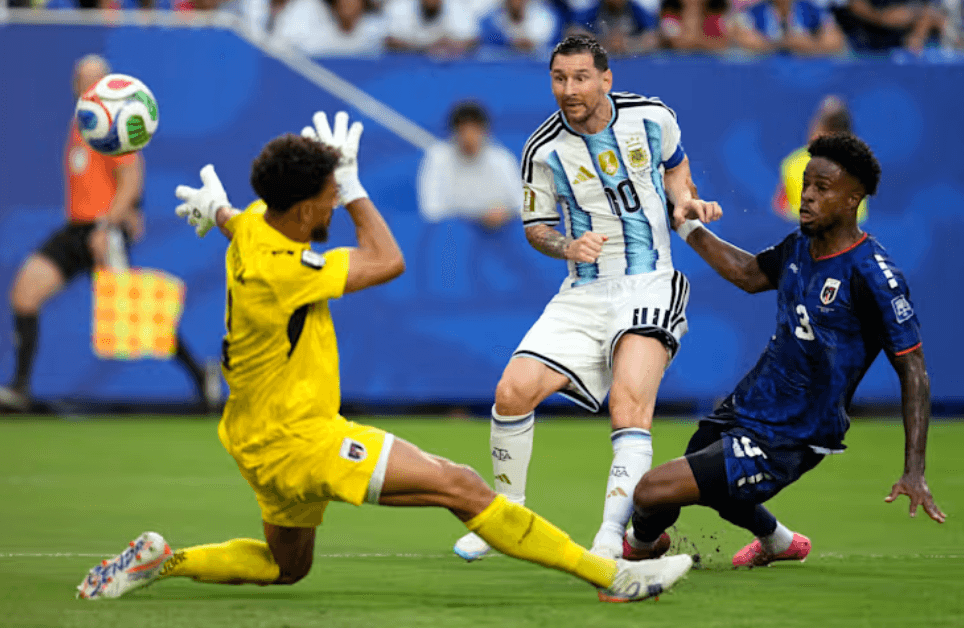
Beyond the two finalists, this tournament will be remembered for its shocks as much as its spectacle. Cape Verde, appearing at their first World Cup, held two-time champions Spain to a goalless draw in the group stage, one of several results that underlined how the expanded format has widened the competitive base of the sport. For African football in particular, that kind of moment matters: proof, on the largest stage available, that debutant nations can compete with the game's traditional powers even if the road to a first title remains long.
Spain's coronation closes a World Cup that pushed the tournament's scale, commercial ambition and geographic footprint further than ever before. What it confirmed on the pitch was simpler: a Spanish side built on control, patience and depth was the best team across seven weeks of football, and it had just enough in the tank, and just enough quality on the bench, to turn a stalemate into a trophy.
Related Reading
- Spain's road to the final: how La Roja's defence conceded only once all tournament
- Lamine Yamal at 19: the youngest World Cup winner's rise from La Masia to global stardom
- What comes next for Argentina and Lionel Messi after international retirement speculation
- Cape Verde's group-stage draw with Spain and what it means for African football's growth on the world stage
By Chrispen Nkosi, The Editor, Continental View | Ground View News
Shared 0 times
Editorial note: This article represents the opinion and analysis of the author and does not constitute verified fact. Ground View News strives for accuracy and publishes corrections when errors are identified. View our editorial policy · Editorial disclaimer
Related Articles
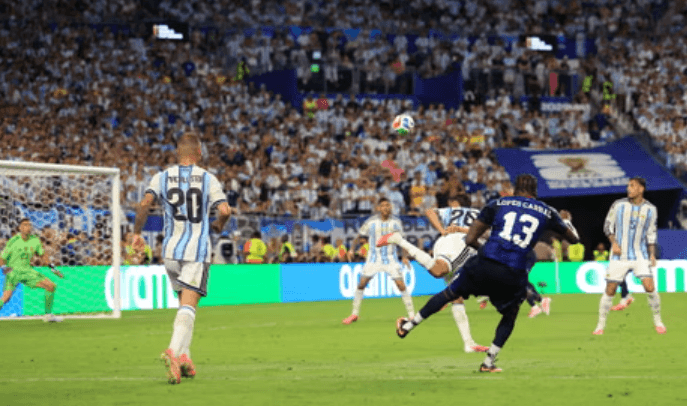
David Against Goliath in Miami: What Argentina vs Cape Verde Really Shows Us About the Gap in World Football
Cape Verde's squad tells a different story.
Cape Verde Stun Messi's Argentina Into Extra-Time Thriller as Blue Sharks Chase the Impossible in Miami
The winner advances to face Egypt in Atlanta on July 7, after the Pharaohs beat Australia on penalties earlier on Friday to reach their own first-ever World Cup knockout stage.
Egypt Outlast Australia on Penalties After a 120-Minute War of Attrition to Reach the World Cup Last 16
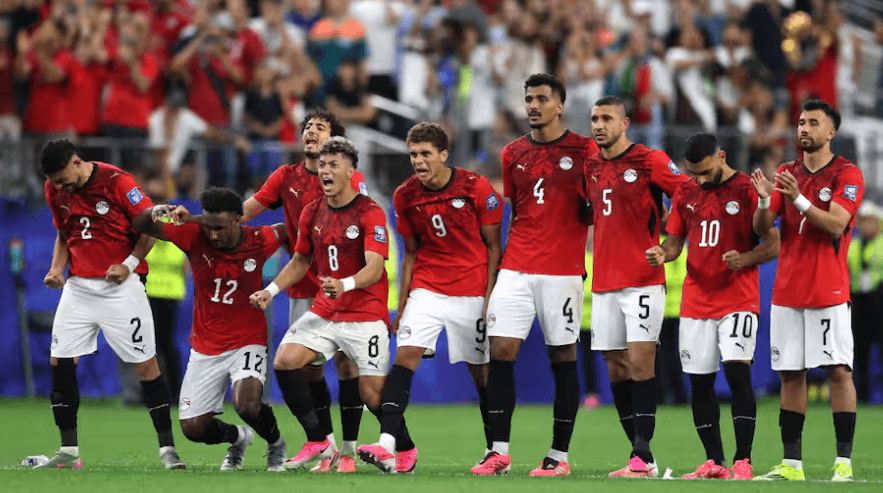
Egypt now turn their attention to Atlanta and a last-16 tie against either Argentina, the reigning champions, or Cape Verde, the tournament's standout minnows.