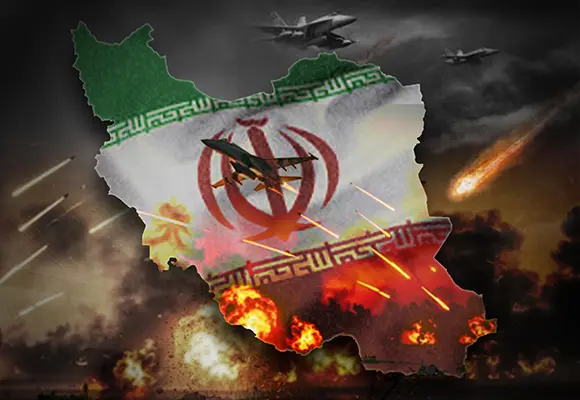
Iraq Between Two Powers: New Government, Grey List, and the Disarmament Question
Chrispen Nkosi, The Editor, Continental View | Ground View News
28 June 2026
Iraq enters the second half of 2026 at a moment of genuine, if precarious, political transition. A new government under Prime Minister Ali al-Zaidi has moved quickly to establish itself, including becoming what observers have described as "the fastest Iraqi Prime Minister to reach the White House after assuming office." But the challenges that have defined Iraq for two decades, militia influence, foreign interference, economic fragility, and institutional weakness, have not dissolved with a change in leadership.
The Washington Dimension
Al-Zaidi's early visit to Washington has been interpreted by Iraqi analysts as an attempt to signal a cleaner break from the previous period, to attract US investment, and to position Baghdad as a more reliable partner in a region that has been reshaped by the Iran-US conflict that began in February 2026.
Behind the scenes, the visit is understood to have included discussions around expanding US corporate presence in Iraq's southern oil fields and the potential granting of Starlink licences, an opening of airspace and communications that would represent a significant shift. But as Iraqi political analyst Ghalib al-Nahi observed pointedly, "Al-Zaidi's visit is not a sightseeing trip… The man carries a briefcase full of promises, but he knows that the real decision-maker may not be in Baghdad or Washington."
The challenge al-Zaidi faces is structural: the continued influence of armed factions, including Kataib Hezbollah, which pledged in May to keep up its activities and retain its weapons, means that any meaningful commitment to Washington on disarmament carries enormous domestic political risk.
The US and the Gulf Cooperation Council have backed Baghdad's bid to disarm armed factions. Al-Zaidi's government has said it supports the integration of Popular Mobilisation Forces into official security structures, but with the condition that leaders associated with armed factions be removed. That condition has not been met.
The FATF Grey List
In a significant blow to Iraq's financial credibility, the Financial Action Task Force (FATF) placed Iraq on its "grey list", known formally as the enhanced monitoring list, at its June 2026 plenary meeting. FATF Chair Elisa de Anda Madrazo stated that "there is still an urgent need to take measures to address the risks associated with heavy cash transactions, increase judicial investigations related to money laundering, and enhance the use of financial information."
Grey list status carries real consequences. International banks become more cautious about correspondent relationships with Iraqi institutions. Investment decisions are affected. The cost of doing business through formal channels increases. For a government that has positioned economic reform and anti-corruption as its defining priorities, the timing is particularly damaging.
Al-Zaidi's ministerial programme has highlighted financial reform as a cornerstone of his administration. The FATF decision suggests that international oversight bodies have not yet seen the structural changes necessary to justify confidence.
The Regional Position
Iraq's geographic position, bordering Iran, Saudi Arabia, Syria, Turkey, and Kuwait, makes it simultaneously one of the most strategically important and most exposed countries in the Middle East. During the Iran-US conflict, US embassies in Iraq and other Arab states began evacuating personnel in early June in response to Iranian threats on American bases. The Houthis threatened retaliation against the United States if attacks on Iran continued. Iraq, technically a non-combatant, found itself hosting the consequences of a war it did not choose.
The country's $6 trillion-plus petroleum reserves and the ambitious Grand Faw Port project, now operational and designed to carry 55 million tons of cargo annually, represent genuine economic potential. The "Development Road" linking the Gulf to Europe via Turkey is a project with transformational ambition. Whether Iraq can create the stability and institutional capacity to realise that potential remains the central question.
Bigger Picture
Iraq's current moment is one of genuine transition, but transition in a country where power remains deeply contested, and external actors retain significant influence is not the same as stability. Al-Zaidi's government faces a test: can it build enough institutional legitimacy, financial credibility, and domestic security to move Iraq beyond the cycle of dysfunction that has defined the two decades since 2003?
References
- TNT Tishwash / Shafaq News Agency, Sunday Iraq News Roundup June 21, 2026
- Shafaq News, US, GCC Back Baghdad's Bid to Disarm Armed Factions, June 2026
- Al Arabiya, Kataib Hezbollah Vows to Keep Arms as Iraq Faces US Pressure to Disarm Groups, 30 May 2026
- Enabling Peace in Iraq Centre (EPIC), Ten Key Stories to Watch in Iraq in 2026, January 2026
- GeoBit Intelligence, Iraq Security Brief June 27, 2026
- Iraq News / Al Arabiya, UAE Urges Iraq to Prevent Attacks from Its Territory, May 2026
By Chrispen Nkosi, The Editor, Continental View | Ground View News
Shared 0 times
Editorial note: This article represents the opinion and analysis of the author and does not constitute verified fact. Ground View News strives for accuracy and publishes corrections when errors are identified. View our editorial policy · Editorial disclaimer
Related Articles
Zimbabwe's Senate Approves Constitutional Coup Mnangagwa to Remain in Power Until 2030
The bill originated in ZANU-PF's 2024 annual conference in Bulawayo