Zimbabwe's Senate Approves Constitutional Coup Mnangagwa to Remain in Power Until 2030
The bill originated in ZANU-PF's 2024 annual conference in Bulawayo
Chrispen Nkosi, The Editor, Continental View | Ground View News
28 June 2026
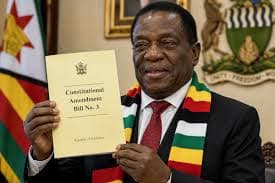
Zimbabwe's Senate has passed the Constitution of Zimbabwe Amendment (No. 3) Bill, sending the country's most controversial piece of legislation in decades to President Emmerson Mnangagwa for signature. With 75 senators voting in favour and only four against, the bill cleared the required two-thirds majority with ease, completing a legislative process that critics have called a constitutional coup and a betrayal of the democratic principles enshrined in Zimbabwe's 2013 constitution.
What the Bill Does
The amendments are sweeping and consequential. Presidential terms are extended from five to seven years, meaning Mnangagwa, who took power in a 2017 military coup that ousted Robert Mugabe, will now remain in office until 2030, with elections postponed from 2028. Beyond this extension of tenure, the bill replaces the direct popular election of the president with election by a joint sitting of Parliament, a provision that hands enormous structural power to whichever party controls the legislature. ZANU-PF has dominated Zimbabwe's parliament since independence in 1980.
The Senate has also been enlarged from 80 to 90 members, with the president empowered to appoint ten additional senators based on "professional skills", a provision critics say will allow Mnangagwa to stack the upper chamber. Two previously planned provisions were dropped before the final vote following overwhelming opposition: the merger of the Zimbabwe Gender Commission with the Zimbabwe Human Rights Commission, and provisions that would have allowed traditional leaders to participate in partisan politics.
The bill originated in ZANU-PF's 2024 annual conference in Bulawayo, where the party adopted its "2030 Agenda", a framework explicitly designed to maintain political continuity and extend the current government's mandate. Cabinet backed the amendments in February 2026.
The Opposition Response
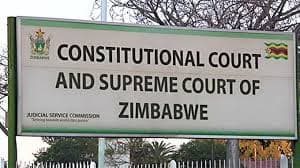
The opposition has been clear about its intentions. Despite the bill's passage through both chambers of parliament, Zimbabwe's opposition parties say the fight is not over. Several options remain theoretically available, including a legal challenge before the Constitutional Court, an international petition, or an argument that certain provisions of the bill engage section 328 of the Constitution, which requires entrenched constitutional matters to be put to a referendum.
Human Rights Watch, writing in March 2026, documented how Zimbabwe's authorities had used violence and intimidation against those opposing the amendments during the public consultation phase. Activists reported arrest, assault, and surveillance. At a public hearing in Bulawayo, prominent author and political activist Judith Todd and the city's Mayor, David Coltart, were prevented from speaking after the chair of the meeting ignored them and brought the meeting to an abrupt close.
One young activist, Denford Sithole, was reportedly taken by unidentified individuals shortly after making a presentation opposing the bill at a meeting in the same city.
The Broader Context
Mnangagwa assumed power at 83 years of age, a figure whose entire political life has been spent within ZANU-PF. His claim to legitimacy rested on promises of economic reform, anti-corruption measures, and democratic renewal after Mugabe's 37-year rule. Eight years into that promise, Zimbabwe's economy remains fragile, its press freedom rankings have deteriorated, and the country is now extending a presidency through constitutional amendment rather than the ballot box.
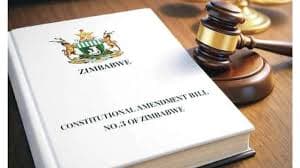
The removal of direct presidential elections is particularly significant. In most functioning democracies, the direct popular mandate is the primary source of executive legitimacy. Shifting that mandate to Parliament, where ZANU-PF holds a dominant bloc alongside traditional leaders and disability representatives who voted in favour, removes the most important accountability mechanism available to ordinary Zimbabweans.
Zimbabwe was elected to a rotating seat on the UN Security Council in June 2026. That appointment now sits in uncomfortable juxtaposition with these constitutional changes.
Bigger Picture
Constitutional amendments that extend presidential terms and remove popular elections represent a pattern that has appeared in multiple African states over recent years. Each case has its specific context. But the effect of concentrating power, reducing accountability, and insulating incumbents from democratic challenge is consistent. Zimbabwe's opposition says the fight is still on. The world should be watching.
References
- Al Jazeera, Zimbabwe's Senate Approves Amendment Extending Presidential Term, 24 June 2026
- AllAfrica / 263Chat, Senate Passes Constitutional Amendment Bill 3, 25 June 2026
- AllAfrica, Zimbabwe: The Fight Is Still On! Opposition Says As ZANU-PF Celebrates CAB3's Senate Approval, 25 June 2026
- The Washington Post, Zimbabwe's Senate Approves Bill to Delay the Presidential Election and Overhaul the Vote, 24 June 2026
- ConstitutionNet, Zimbabwe's National Assembly Approves Controversial Constitutional Amendment, 18 June 2026
- Human Rights Watch, Statement on Zimbabwe's Constitutional Amendment Bill, March 2026
- Trevor Grundy News, Zimbabwe 2026: The Past Is Another Country Or Is It?, April 2026
By Chrispen Nkosi, The Editor, Continental View | Ground View News
Shared 0 times
Editorial note: This article represents the opinion and analysis of the author and does not constitute verified fact. Ground View News strives for accuracy and publishes corrections when errors are identified. View our editorial policy · Editorial disclaimer