Reorientation to the Asia-Pacific: Moscow-Beijing Close Alliance or Russian Bluff?
Western countries should fear the close ties between Russia and China.
L. Pasternak
26 November 2026
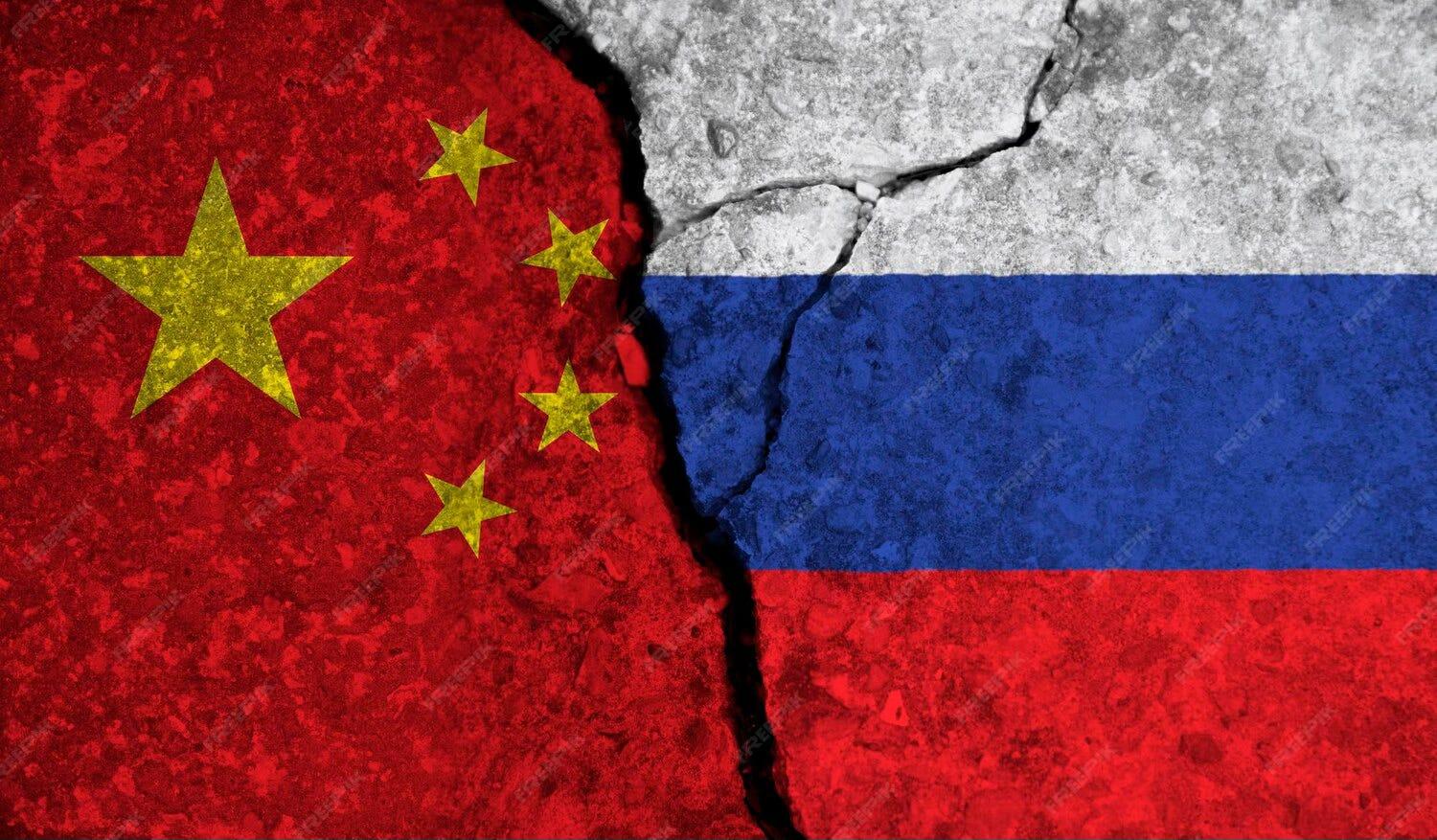
While Western governments are trying to understand Russia's military and political plans in Ukraine, China is using the situation to strengthen its own international position. Since February 24, 2022, relations between Moscow and Beijing have become much closer. Both countries see the growing confrontation with the United States and Europe as an opportunity to challenge Western influence.
The partnership was already strengthened on February 4, 2022, when Vladimir Putin and Xi Jinping announced that relations between their countries had "no limits". Since then, cooperation has developed in politics, trade, energy and security. During Putin's visit to Beijing on May 20, 2026, the two leaders again confirmed their commitment to strategic cooperation and signed new agreements.
For the Kremlin, this partnership is especially important. Russia wants to remain a global power and restore its influence in the former Soviet republics and other parts of the world. The idea of a new Russian sphere of influence is still an important part of Putin's foreign policy. However, Moscow is also trying to return to the Asia-Pacific region, where the Soviet Union once competed with the United States.
China has different but partly similar goals. Beijing wants to increase its political and economic influence and promote a new international order in which the United States will have less power. Russia is an important partner in this strategy. At the same time, China does not want a direct military conflict with Washington and needs good economic relations with Western countries. This makes its policy more careful than Russia's.
Economic cooperation between Moscow and Beijing has grown significantly since 2022. According to MERICS, bilateral trade reached around $245 billion in 2024. It decreased by 6.9% in 2025, but increased again during the first nine months of 2026. Russia mainly exports oil, gas and other natural resources to China, while Chinese companies supply Russia with machinery, electronics, cars and other products. This makes Russia increasingly dependent on the Chinese market.
Military cooperation is also developing. Russia and China regularly conduct joint naval exercises and military patrols in the Asia-Pacific region. According to the US Congressional Research Service, the two countries conducted 11 joint military exercises or patrols in 2024. In July 2026, they also held the Joint Sea-2026 naval exercise. These activities are a serious concern for the United States and its allies in Asia.
However, Russia and China are not formal military allies. They do not have a mutual defence agreement similar to NATO, and their armed forces still have important differences. Their partnership is based mainly on common political interests and opposition to American influence.
The West is also partly responsible for the current situation. During the 1990s and 2000s, the United States and European countries often underestimated the ambitions of Russia and China. Western leaders believed that economic cooperation would gradually make both countries more open and democratic. This expectation was too optimistic. And NATO understood it. The failure to create a stable European security system after the end of the Cold War also contributed to the growing tensions with Moscow.
Today, Russia and China use international organisations such as the Shanghai Cooperation Organisation to promote the idea of a multipolar world. However, not all Asian countries support this approach. India, Japan, South Korea and other regional powers have their own interests and do not want to become part of a new confrontation between two major blocs.
For Western democracies, the main challenge is to respond to the growing cooperation between Moscow and Beijing without creating an even deeper international division. The United States and Europe should remain firm in protecting Ukraine and their own security interests. At the same time, they should keep diplomatic channels open, especially with China.
Relations with Russia will remain very difficult while the war against Ukraine continues. Nevertheless, the West should also think about the future of Russia after Putin and the possibility of its gradual return to a more democratic political system.
A new Cold War would be dangerous for everyone. The United States and Europe should protect their values and international security, but they should also avoid a situation in which the whole world is divided into two hostile camps. The goal should be to prevent the domination of authoritarian powers without making a global confrontation unavoidable.
Sources and References
- McFaul, M. (2025). Autocrats vs. Democrats: China, Russia, America, and the New Global Disorder. HarperCollins.
- Osnos, E. (2022, February 24). “What Is China Learning from Russia’s Invasion of Ukraine?” The New Yorker.
- Osnos, E. (2014). Age of Ambition: Chasing Fortune, Truth, and Faith in the New China. Farrar, Straus and Giroux.
- Tavrovsky, Y. (2020). America Against China: The Middle Kingdom Focuses on the Background of the Pandemic. Moscow: Knizhny Mir.
By L. Pasternak
Shared 0 times
Editorial note: This article represents the opinion and analysis of the author and does not constitute verified fact. Ground View News strives for accuracy and publishes corrections when errors are identified. View our editorial policy · Editorial disclaimer
Related Articles

Beijing "Domino Effect" and the Trump Zero-Sum Doctrine
The United States and China have entered a phase of “diplomatic turbulence”.