Two Roads to Budapest
They built their way there, through completely different philosophies and by dramatically different roads.
Ground View Editor
28 May 2026
Arsenal and Paris Saint-Germain meet in the Champions League final on 30 May. One club has built something methodically and waited two decades for this moment. The other is trying to make history. Both deserve the stage they've earned.
There is a version of this story that writes itself easily. Arsenal, the nearly club runners-up in 2006, bystanders for most of the two decades since, are finally back at the summit of European football. Paris Saint-Germain, the project, the oligarch dream, the team built from extraordinary financial resources, trying to do what only Real Madrid has managed in the Champions League era: win it back-to-back.
That version is accurate as far as it goes. But it misses what makes this particular final genuinely worth watching.
These two clubs did not stumble into Budapest. They built their way there, through completely different philosophies and by dramatically different roads.
Arsenal's Road: Perfection, Then Resolve
Arsenal's journey through the 2025-26 Champions League is, statistically, unprecedented. The club won all eight of their league-phase matches, the first team in the competition's history to achieve a perfect record at that stage.1 They conceded just four goals across those eight games. That is not a run. That is a statement.
The knock-out stages brought a different kind of test. They eliminated Bayer Leverkusen 3-1, Sporting CP 1-0, and then, in the semi-final, Atlético Madrid 2-1 on aggregate.2 That last result was earned, not gifted. Atlético under Diego Simeone remain one of the most difficult opponents in European football to break down. Arsenal broke them down.
The spine of this Arsenal team is built on defensive solidity. William Saliba and Gabriel Magalhães have arguably been the best centre-back partnership in Europe this season. David Raya equalled the club record for clean sheets, reaching 19 in the Premier League alone.3 These are not incidental details. They are the reason Arsenal arrived in Budapest as Premier League champions and Champions League finalists, a double the club has not won since Arsène Wenger's era.
Viktor Gyökeres has contributed 14 Premier League goals. Bukayo Saka and Eberechi Eze provide the creativity and unpredictability that a defence-first team requires from its attacking players.4 This is a complete squad, not a collection of individual talents, and that completeness is the product of years of patient construction.
PSG's Road: Chaos, Brilliance, and Survival
Paris Saint-Germain's path to the final has been, by contrast, a story about resilience under pressure and the capacity of a genuinely elite squad to find a way through even when the road is not clean.
PSG finished eleventh in the league phase, a position that required them to enter the play-off round, where they beat Monaco 5-4 in a match of spectacular attacking football.5 From there, they found a different gear: Chelsea were beaten 8-2, a result that spoke to the absolute ceiling of what this squad is capable of, and Liverpool were dispatched 4-0.6
The semi-final against Bayern Munich was something else entirely. The aggregate score over two legs was 6-5. PSG had won the first leg 5-4. Bayern levelled the tie at the Allianz Arena with a 1-1 draw, but PSG held on to advance on aggregate.7 In a competition where the margins are as fine as they are at this stage, surviving a tie of that nature against a Bayern side of that quality while managing to score five goals in a single leg tells you something important about the attacking quality that Luis Enrique has developed in this squad.
Ousmane Dembélé, Khvicha Kvaratskhelia, Désiré Doué, and Joao Neves form the core of a system built on pressing, positional fluidity, and bursts of individual brilliance from players who understand their roles within a collective structure.8 Luis Enrique has rebuilt PSG from a team of expensive personalities into something more coherent, though that rebuilding has not always been linear.
PSG won the 2025 Champions League, defeating Inter Milan 5-0 in the final.9 They arrive in Budapest as defending champions. No club has retained the trophy since Real Madrid completed three consecutive wins between 2016 and 2018.10
What the Final Turns On
The tactical question at the heart of this match is straightforward to identify and difficult to resolve: can Arsenal's defensive discipline absorb PSG's attacking fluency for 90 minutes, and can Arsenal's own attack produce the moments of quality required against a PSG side that is capable of scoring from multiple positions?
PSG's press is their weapon. They close space quickly, they force errors high up the pitch, and when they win the ball in transition, they move it to dangerous positions before the opposition can reorganise. Arsenal have the Premier League's best defensive record. Whether that defensive structure holds up under a sustained PSG press in a final in Budapest is not a question that statistics can answer.
Arsenal's set-piece threat, both Saliba and Gabriel, is dangerous from corners and free kicks, giving them an avenue that PSG cannot eliminate through tactical organisation. If this final is tight and low-scoring, Arsenal's structural defensive superiority and dead-ball threat could be the deciding factor. If PSG's press works and transitions flow freely, the match may look very different by the interval.
The Larger Story
Football finals rarely deliver everything they promise. The tactical intensity of a Champions League final can produce conservative, cautious football that disappoints the neutral. It can also produce something extraordinary.
What is certain is that both clubs have earned their place in this fixture honestly. Arsenal's perfect eight-game run through the league phase represents a standard of consistency that the competition has not previously seen. PSG's survival of a 6-5 aggregate semi-final against one of Europe's elite sides represents something different but equally real: the capacity to absorb chaos and remain dangerous.
Budapest on 30 May will produce a champion. What it will not do is resolve the question of which approach to building a football club is more admirable: the patient, structural work of Mikel Arteta over several years, or the investment-driven ambition of a club that has pursued a first Champions League title since the project began and is now defending it.
Both approaches can produce great football. Tonight's final may not settle the argument. But it will, at minimum, be worth watching.
Continental View publishes independent commentary and analysis on global affairs and sport. This article draws on reporting from UEFA.com, Yahoo Sports, the Olympics.com Champions League guide, and FIFAWorldCupNews.com.
Footnotes
-
Olympics.com, "PSG vs Arsenal: UCL Final 2026 information and how to watch," 27 May 2026. ↩
-
Ibid. ↩
-
Ibid. ↩
-
Ibid. ↩
-
Ibid. ↩
-
Ibid. ↩
-
Yahoo Sports, "Champions League Final 2026: When and Where Is PSG vs Arsenal?" 6 May 2026. ↩
-
FIFAWorldCupNews.com, "2026 UEFA Champions League Final: PSG vs Arsenal," accessed 28 May 2026. ↩
-
UEFA.com, "Paris vs Arsenal | The final | UEFA Champions League 2025/26," accessed 28 May 2026. ↩
-
Ibid. ↩
By Ground View Editor
Shared 0 times
Editorial note: This article represents the opinion and analysis of the author and does not constitute verified fact. Ground View News strives for accuracy and publishes corrections when errors are identified. View our editorial policy · Editorial disclaimer
Related Articles
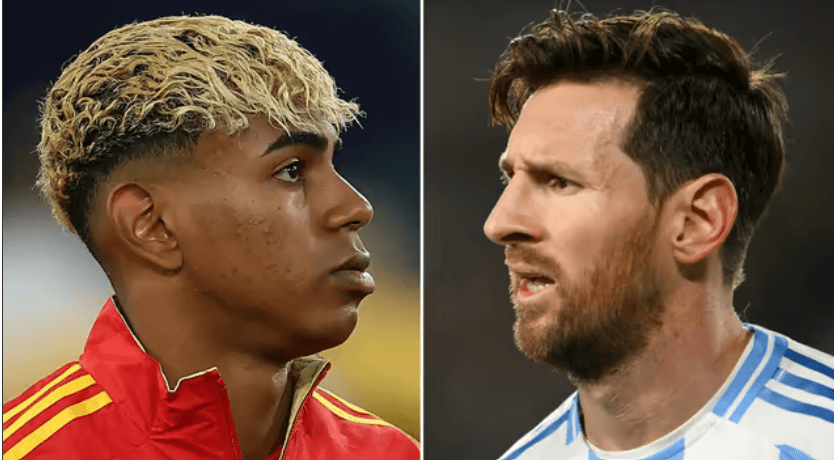
Spain Bring the World Cup Home: La Roja Beat Argentina 1-0 to Claim Second Global Crown
Spain Bring the World Cup Home to Europe
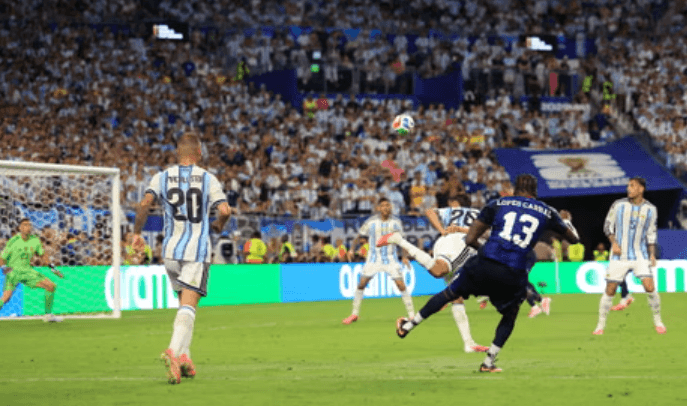
David Against Goliath in Miami: What Argentina vs Cape Verde Really Shows Us About the Gap in World Football
Cape Verde's squad tells a different story.
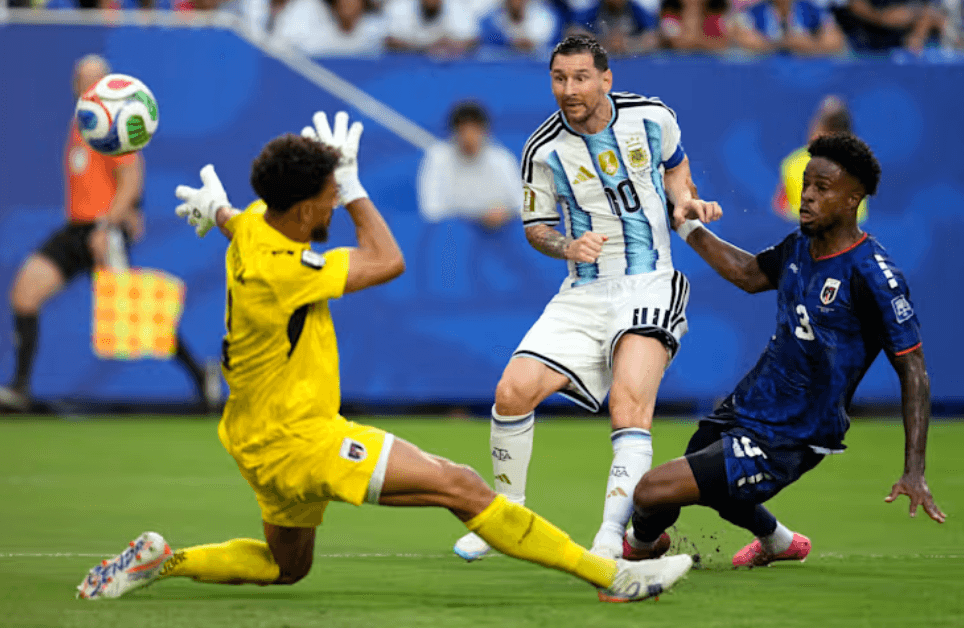
Cape Verde Stun Messi's Argentina Into Extra-Time Thriller as Blue Sharks Chase the Impossible in Miami
The winner advances to face Egypt in Atlanta on July 7, after the Pharaohs beat Australia on penalties earlier on Friday to reach their own first-ever World Cup knockout stage.