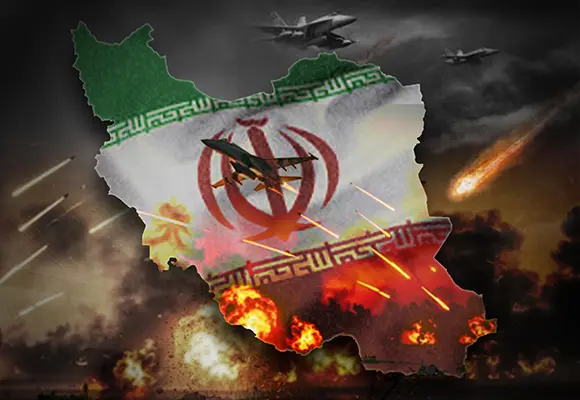
Three months of war, missile strikes, a contested ceasefire, and a global shipping crisis and the United States and Iran are still, as of this writing, talking. That alone is something. Whether it amounts to anything durable is a separate question, and one that deserves more rigorous scrutiny than the optimistic headlines suggest.
The broad outlines of what is being discussed have been reported by multiple credible outlets. According to Axios, the agreement under negotiation involves a 60-day ceasefire extension during which the Strait of Hormuz would be reopened, Iran would be permitted to freely sell its oil, and both parties would enter formal negotiations on curbing Iran's nuclear programme.1 A US official described it as "an agreement to get everybody to the table," with the details to be worked out in subsequent talks.
That framing should give observers pause. An agreement to agree is not an agreement. And the gap between what Washington is saying publicly and what Tehran's officials are saying privately has been wide enough to drive a tanker through, which, until this is resolved, nothing can.
What the Proposed MOU Actually Contains
The proposed memorandum of understanding, according to reporting from Axios and confirmed in broad terms by Iranian state media, involves several interlocking commitments.2 Shipping in the Strait of Hormuz would become unrestricted. Iran would remove all naval mines within 30 days. Ships would face no tolls or interference. In exchange, Iran would be permitted to sell oil freely, a significant economic concession from Washington and nuclear talks would begin within a 30 to 60-day window.
Iran's foreign ministry has characterised it as a first phase, with broader discussions to follow.3 That description, from Tehran's side, implies considerable distance still to travel. It does not suggest an imminent, comprehensive settlement.
On nuclear enrichment, the issue that underpins everything, the parties remain far apart. The US position has been that Iran must commit to zero enrichment. Iran has rejected that framing on multiple occasions. The head of Iran's Atomic Energy Organisation has stated publicly that Iran will not accept limits on its enrichment programme.4 Reports suggest the US may be proposing to time-limit any commitment to 20 years; Iran has reportedly countered with five.5
These are not minor technical disagreements. They go to the core of what Iran believes it is entitled to and what the United States is willing to accept as a durable settlement.
The War That Got Them Here
This negotiation is taking place in the shadow of a conflict that began on 28 February 2026, when the United States and Israel launched coordinated large-scale strikes on Iranian military and nuclear sites.6 What followed was a three-month war that included US military strikes against Iranian boats and missile launch sites, Iranian disruption of Strait of Hormuz shipping, and extensive damage to Iran's military infrastructure.
The Strait of Hormuz is not an abstraction. It is a narrow waterway through which a significant portion of the world's oil and liquefied natural gas transits. Its closure, or even the threat of closure, is felt immediately in energy prices and acutely by economies, particularly in Asia that depend on Gulf oil flows. India, China, South Korea, and Japan all have enormous stakes in what happens in those waters, regardless of their formal positions on the conflict itself.
That economic pressure is precisely why this negotiation has momentum. It is not because either party has fundamentally changed its position on Iran's nuclear future. It is because the cost of sustained closure is politically and economically intolerable for too many powerful actors.
Trump's Role: Asset or Liability?
President Trump announced on social media that a deal had been "largely negotiated, subject to finalisation," a characterisation that US officials subsequently walked back by noting that nothing had been signed and that final sign-off was still required from both Trump and Iran's Supreme Leader.7 Iran's senior diplomat, quoted by ISNA news agency, stated that Iran had not committed to nuclear issues, including highly enriched uranium.8
This is the pattern that has characterised the negotiation throughout: public declarations of progress that are almost immediately qualified by the parties who are supposed to have made them. Trump set three sequential deadlines for a deal in March 2026: 21 March, then 23 March, then 7 April, before attacks were postponed as Pakistan arranged the initial ceasefire.9 The deadlines passed. The war continued. Talks resumed.
Trump's negotiating style can produce results through unpredictability, but it also creates serious credibility problems when the gap between declaration and reality becomes visible. Iranian negotiators know this. They have watched the US withdraw from the JCPOA in 2018 and understand, better than most, the risks of trusting a signed commitment that a subsequent administration or the same administration in a different mood might repudiate.
What Happens If It Fails
If no deal is reached, US officials have stated that Trump will retain economic and military options.10 Given the scale of what has already been struck, that is not an idle threat. But the costs of renewed escalation to oil markets, to the broader Middle East, to whatever remains of US diplomatic credibility in the region are also significant.
There is a version of this story in which the 60-day window provides genuine breathing space, nuclear talks make incremental progress, and a longer-term framework emerges over 2026 and 2027. There is another version in which the MOU collapses, enrichment talks stall, and the ceasefire unravels.
As of 28 May, no document has been signed. The optimism is real. So is the distance between the parties.
The Strait of Hormuz remains, for now, a waterway and a metaphor: a narrow passage through which enormous forces are trying with uncertain success to find a way through.
Continental View publishes independent commentary and analysis on global affairs. This article draws on reporting from Axios, NPR, CNBC, Al Jazeera, and the UK House of Commons Library research briefing on US-Iran negotiations (updated 28 May 2026).
Footnotes
-
Barak Ravid, "Exclusive: What's inside the Iran deal Trump is close to signing," Axios, 23 May 2026. ↩
-
Ibid. ↩
-
"US says Iran deal agreed as Tehran accuses Washington of obstruction," Al Jazeera, 24 May 2026. ↩
-
House of Commons Library, "US-Iran ceasefire and nuclear talks in 2026," Research Briefing CBP-10637, updated 28 May 2026. ↩
-
Ibid. ↩
-
Ibid. ↩
-
"US says Iran deal agreed as Tehran accuses Washington of obstruction," Al Jazeera, 24 May 2026. ↩
-
"US military strikes Iran as Trump says negotiations move forward," NPR, updated 25 May 2026. ↩
-
House of Commons Library, CBP-10637. ↩
-
CNBC, "Traders' hopes fade for US-Iran nuclear deal this year," 28 May 2026. ↩
By Ground View News | Continental View
Shared 0 times
Editorial note: This article represents the opinion and analysis of the author and does not constitute verified fact. Ground View News strives for accuracy and publishes corrections when errors are identified. View our editorial policy · Editorial disclaimer