The Life and Death of Linda Tsungirirai Masarira
She Drove Trains Before She Drove History
Chrispen Nkosi
24 May 2026
Zimbabwe lost one of its most defiant voices today. Linda Tsungirirai Masarira, founder and president of the Labour Economists and African Democrats (LEAD) party, died in Harare on the morning of Sunday, 24 May 2026. She was 43 years old.
The announcement came from her close friend and associate Abigale Mupambi, who confirmed the news in a public death notice. "It is with deep sorrow and a heavy heart to announce the passing on of a close friend and associate, a comrade to many, LEAD president Linda Tsungirirai Masarira, today, Sunday, 24 May 2026," Mupambi wrote. She had been battling health challenges for some time, though those around her believed she was recovering. Mupambi noted she had spent several hours with Masarira at her office just two days before, and that she had appeared well.1
The shock of her death ricocheted across Zimbabwe's political divide. Government spokesperson Nick Mangwana, representing an administration Masarira had spent years confronting, paid tribute. "It is with a heavy heart that I mark the passing of Ms Linda Masarira, a loss that leaves us all diminished. May she find eternal peace," Mangwana wrote on X.2
Before the Protest Lines: A Woman of the Rails
Most obituaries reduce Linda Masarira to her prison stints and political battles. They start at the moment she became newsworthy. This one will not.
She was born on 3 October 1982 in Harare. She lost her mother when she was six years old and grew up in circumstances that were difficult from the start, the kind of early adversity that either breaks a person or makes them unnervingly clear-eyed about injustice.3 She attended Marlborough High School and Chipindura High School, institutions that served working and lower-middle-class families.4
What came next is the detail that almost every mainstream profile buries or omits entirely: Linda Masarira became a train driver.
She joined the National Railways of Zimbabwe (NRZ) as an assistant train driver and trade unionist, working the rail lines from 2006, traversing cities and towns that few women in her profession ever reached: Bulawayo, Hwange, Mutare.5 In her own words to The Standard newspaper, she was working the rails "as well as a trade unionist" from 2006 until her dismissal.6
This was not a clerical role at a railway office. She drove trains across a country whose physical and economic infrastructure was collapsing under two decades of Mugabe's mismanagement. She saw the decay of the NRZ from inside the locomotive cab. She saw workers unpaid, institutions hollowed out, and the state treating public employees as expendable. When she organised her colleagues into a workers' committee to demand outstanding wages, she was fired.
In her own account, she was "relieved of her duties" for demanding outstanding salaries.7 NPR, which profiled her in 2016, described her as "a train driver and labour leader at National Railways of Zimbabwe, till she was fired... for leading a campaign to demand the payment of back salaries."8
That dismissal was not a setback. It was a radicalisation.
From the NRZ to the Street: The Making of an Activist
What Masarira carried from the railways into public life was not grievance; it was a structural understanding of how Zimbabwe's working class was being stripped of dignity and income by a state that owed them both. Her activism, when it came, was grounded in labour realities rather than borrowed political ideology.
She entered civil society formally in 2015, joining the Zimbabwe Activists Alliance (ZAA) and co-founding the Tajamuka/Sesjikile Campaign movement, a street-level pressure group that became a recurring nightmare for the Mugabe administration.9 She also founded the Zimbabwe Women in Politics Alliance (ZWPA), which advocated for gender equality, women's rights, and the political inclusion of marginalised communities.10
In July 2016, she was arrested for participating in a nationwide shutdown protest. What followed illustrated how seriously the Mugabe government took her. While her co-activists were granted bail and released, Masarira was held without bail at Mbare Magistrates Court and transferred to Chikurubi Maximum Security Prison, a male facility on remand.11 Her case was repeatedly postponed in what observers widely characterised as judicial obstruction.12
During her 84 days in Chikurubi, she organised fellow women prisoners in protest against the facility's inhumane conditions, lack of sanitary products, deteriorating health services, and inadequate food. For this, she was transferred to the male wing and placed in solitary confinement. The state intended this to break her. It had the opposite effect.13
She was finally released in September 2016 after her lawyers obtained a High Court order challenging the lawfulness of her detention. Speaking to OkayAfrica after her release, Masarira described Chikurubi in terms that left no ambiguity: "For me, Chikurubi is the worst prison any human being may ever be kept in the world as it is worse than the Guantanamo Bay detention camp."14
She had been awarded the ZimRights People's Choice Award in 2016 while she was still being held. The following year, she received the Zimbabwe International Women's Awards Humanitarian Award.15
Into Party Politics: A Fraught Path Through Male Structures
Masarira's transition from street activist to party politician was never clean or comfortable, and she never pretended otherwise.
She briefly joined Tendai Biti's People's Democratic Party (PDP) in 2017 as a member of its executive management committee, responsible for recruitment and mobilisation. She then became spokesperson for the MDC-T faction led by Thokozani Khupe. She was eventually fired from that role for wearing ZANU-PF regalia at home, a charge she viewed as a pretext to remove a woman who refused to play by the rules of the male party structures she operated within.16
In April 2019, she founded LEAD, the Labour Economists and African Democrats, positioning it as a platform built on economic justice, labour rights, social democracy, and pan-Africanism. She became the third vice president of the Convergence PanAfricaine, a continental decolonisation movement, in July 2019.17
Her participation in the Political Actors Dialogue (POLAD), an initiative convened by President Emmerson Mnangagwa following the disputed 2018 elections, attracted sustained criticism from parts of the opposition who viewed the forum as a mechanism to legitimise Mnangagwa's presidency. Masarira consistently rejected the characterisation that she had aligned with ZANU-PF, insisting her engagement was conditional and in the national interest.18
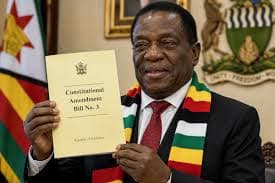
In May 2026, just days before her death, LEAD under her leadership conditionally backed Constitutional Amendment Bill No. 3 (CAB3), the latest point of political controversy she engaged without apology.19
The 2023 Presidential Campaign: Lawfare and Locked Doors
In June 2023, Masarira declared her candidacy for the presidency of Zimbabwe, one of only two women to do so.
Her analysis of what happened next was precise and unflinching. She described to the Nordic Africa Institute how the Zimbabwe Electoral Commission had raised presidential nomination fees from US$1,000 to US$20,000, effectively pricing out smaller parties and independent candidates.20 But beyond the financial barrier, she contended she faced coordinated legal obstruction.
When she went to pay her nomination fees three days ahead of nomination day, she was told to return on the day itself. The subsequent court case was staggered. Her hearing came one day before the closure of the electoral court; the full judgement was only issued a week later, by which point there was no mechanism left to appeal. She compared her treatment directly to that of fellow female candidate Elisabeth Valerio, whose identical case was heard earlier and decided in her favour on the same legal principle.
"It was clear lawfare," she told the NAI researcher Shingirai Mtero. "The people who did not make it to the ballot were Saviour Kasukuwere, and in my view, we both had a higher chance of garnering more votes, and possibly stealing votes from the key parties."21
In August 2023, she was excluded from the final ballot following the court ruling. She had already declared her intention to contest in 2028.22
What She Said About Misogyny and Why It Matters
One of the most significant aspects of Masarira's public life was her willingness to name the specific mechanisms through which women are removed from Zimbabwean political life. She did not speak in the language of vague systemic challenges. She itemised.
In her March 2024 interview with the Nordic Africa Institute, published for International Women's Day, she described three forms of attack deployed against women in politics: misogynistic harassment aimed at portraying opinionated women as uncontrollable and aberrant; the deliberate sexualisation of female candidates' personal lives to undermine their professional credibility; and the systematic financial exclusion of women through a monetised political economy controlled by male networks she described directly as "the patriarchy."
"No one really questioned my professional capacity," she said. "And it is clear that what affects my opponents the most is that I am a woman... this is why I have been discriminated against, this is why I went to prison, this is why I have been elbowed out of male-dominated parties, because I am a woman who refuses to remain in the background, and I refuse to be silenced."23
She was 41 when she said that. She had two years left to live.
A Life Measured in More Than Politics
Linda Masarira was a widow and the mother of five children.24 She was a Christian who spoke openly about her faith alongside her politics. She ran campaigns that extended well beyond the ballot box, including the "Bring Back Our Women from Kuwait" campaign, in which she petitioned the Zimbabwean government and the Kuwaiti Embassy to repatriate Zimbabwean women who had fallen victim to human trafficking networks operating in the Gulf.25
She was not a politician who existed only in parliamentary corridors or party press statements. She was present in the daily lives of people who had been failed by the state.
The Weight of What She Leaves Behind
Zimbabwe is not short of political figures who speak loudly. It is desperately short of those who speak with consequence, whose words are connected to a life that has actually paid a price for its convictions.
Linda Masarira paid that price repeatedly and early. She paid it in a locomotive cab on the NRZ, in a trade union that got her dismissed, in 84 days in a maximum-security prison designed for men, in a courtroom where the law was used against her rather than for her, and in the sustained, gendered harassment that is deployed in Zimbabwe as in so many countries specifically to prevent women from participating in public life.
She did not stop.
She died at 43, two years before the election she intended to contest.
Whether Zimbabwe will produce another voice like hers, grounded in labour, shaped by adversity, unintimidated by power, and articulate about the exact mechanisms of her own exclusion, remains an open and uncomfortable question.
Ground View News | Continental View | Chrispen Nkosi
Sources
Footnotes
-
Bulawayo24 / ZimLive, 24 May 2026. Death announcement by Abigale Mupambi. https://bulawayo24.com/index-id-news-sc-national-byo-264987.html ↩
-
Southerton Business Times / ZimLive, 24 May 2026. Government spokesperson Nick Mangwana's tribute. https://www.southertonbusinesstimes.com/post/zimbabwe-mourns-the-death-of-opposition-politician-and-activist-linda-masarira ↩
-
ZimProfiles, 23 June 2023. Early life and death of the mother. https://zimprofiles.com/linda-masarira-biography-early-life-education-activism-political-career-presidential-ambitions/ ↩
-
ZimProfiles, 23 June 2023. Marlborough High School and Chipindura High School. ↩
-
My Zimbabwe News, 24 May 2026. NRZ career details. https://www.myzimbabwe.co.zw/news/187728 ↩
-
AllAfrica / The Standard, 2 October 2016. Interview: "I worked for the National Railways of Zimbabwe as an assistant train driver as well as a trade unionist from 2006." https://allafrica.com/stories/201610020378.html ↩
-
AllAfrica / The Standard, 2 October 2016. Dismissal for demanding outstanding salaries. ↩
-
NPR, Goats and Soda, 30 November 2016. https://www.npr.org/sections/goatsandsoda/2016/11/30/503825303/young-widow-with-5-kids-turns-to-activism-to-oust-a-president ↩
-
ZimProfiles, 23 June 2023. Tajamuka/Sesjikile and ZAA involvement. ↩
-
ZimProfiles, 23 June 2023. Founding of Zimbabwe Women in Politics Alliance. ↩
-
Pindula, 18 August 2023. Bail denied, transfer to Chikurubi. https://www.pindula.co.zw/Linda_Masarira ↩
-
Pindula, 18 August 2023. Repeated postponements are described as an obstruction of the justice process. ↩
-
263Chat, 1 April 2022. Chikurubi detention, protest, and solitary confinement. https://www.263chat.com/linda-masarira-vilified-violated-but-vigilant/ ↩
-
OkayAfrica, 2016. Post-Chikurubi interview. https://www.okayafrica.com/a-zimbabwean-activist-recalls-her-ordeal-in-harares-most-notorious-prison/187237 ↩
-
ZimbabweHuchi, 10 August 2023. Awards and recognitions. https://zimbabwehuchi.com/linda-masarira-biography-early-life-education-activism-political-career-presidential-ambitions/ ↩
-
ZimbabweHuchi, 10 August 2023. MDC-T dismissal over ZANU-PF regalia; LEAD founding. ↩
-
ZimProfiles, 23 June 2023. LEAD founding April 2019; Convergence PanAfricaine vice presidency July 2019. ↩
-
My Zimbabwe News, 24 May 2026. POLAD participation and accusations of ZANU-PF alignment. ↩
-
My Zimbabwe News, 24 May 2026. LEAD's conditional backing of CAB3 days before Masarira's death. ↩
-
Nehanda Radio, 24 May 2026. Nomination fees increase from US$1,000 to US$20,000. https://nehandaradio.com/2026/05/24/outspoken-zimbabwe-opposition-activist-linda-masarira-dies-at-43/ ↩
-
Nordic Africa Institute, 8 March 2024. Masarira interview with Shingirai Mtero. https://nai.uu.se/stories-and-events/news/2024-03-08-linda-masarira---zimbabwean-gender-activist-and-politician-who-refuses-to-be-silenced.html ↩
-
Nordic Africa Institute, 8 March 2024. Court exclusion from 2023 ballot; intention to run in 2028. ↩
-
Nordic Africa Institute, 8 March 2024. On misogyny, sexualisation, and financial exclusion in Zimbabwean politics. ↩
-
AllAfrica / The Standard, 2 October 2016; Pindula. Mother of five; widow. ↩
-
ZimProfiles, 23 June 2023. "Bring Back Our Women from Kuwait" campaign. ↩
By Chrispen Nkosi
Shared 0 times
Editorial note: This article represents the opinion and analysis of the author and does not constitute verified fact. Ground View News strives for accuracy and publishes corrections when errors are identified. View our editorial policy · Editorial disclaimer