The Sound of Silence: Why Zimbabwean Musicians Still Don't Know What They're Owed
Is In-Total band the first band in Zimbabwe to cover Zimbabwean music legends? Are they just doing it right so much that it feels wrong?
Chrispen Nkosi, The Editor, Continental View | Ground View News
8 September 2026
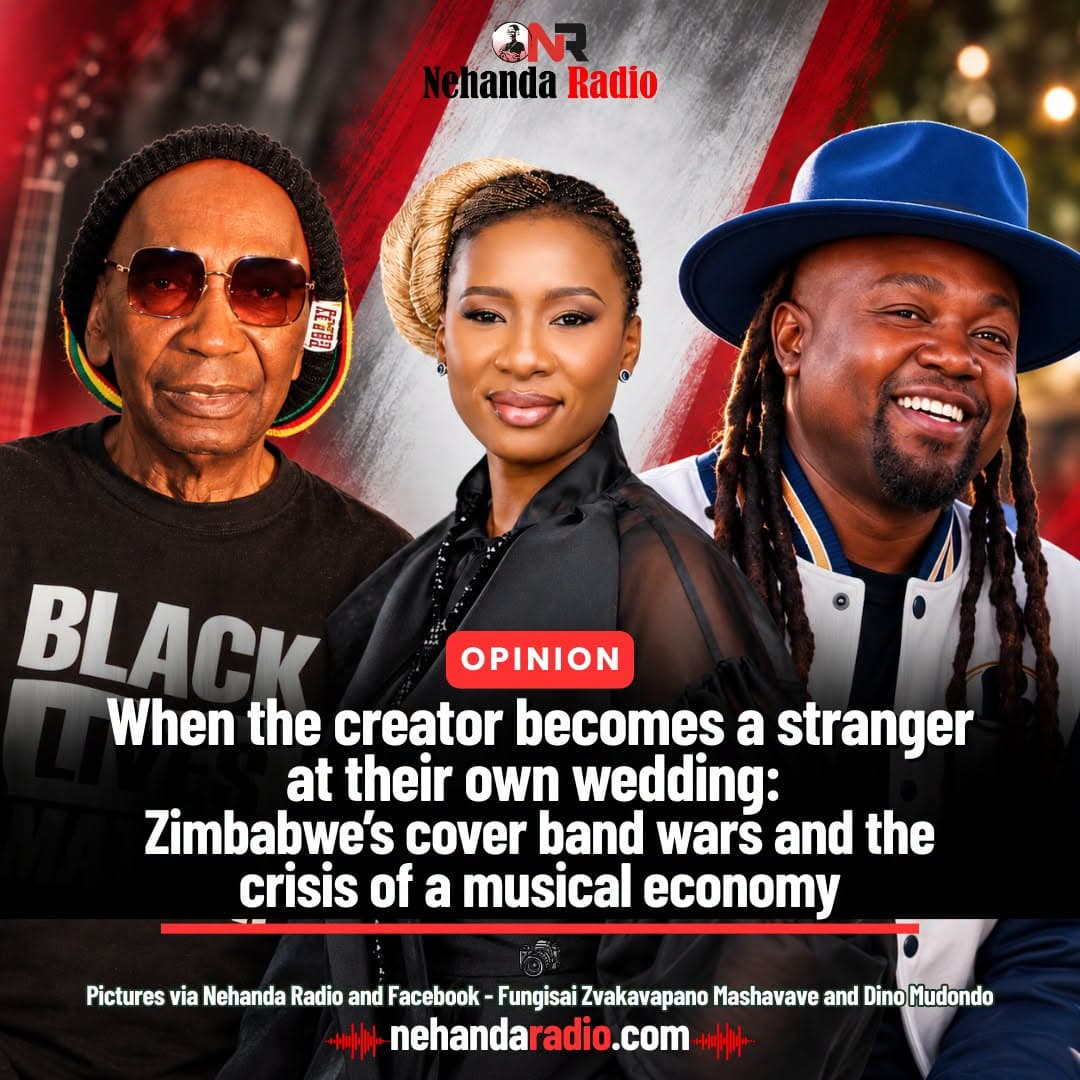
Every time a song plays in a bar in Bulawayo, on a radio station in Harare, or in a wedding reel uploaded from Mutare, someone, under the law, owes the artist who wrote it a small payment. Multiply that by every venue, every station, every platform, every day, and it should add up to a living for the people who make Zimbabwean music. For most working musicians, it doesn't. Parliament's Portfolio Committee on Media, Information and Broadcasting Services spent the week of 31 August hearing exactly why, in public hearings held across five cities, and what artists told them should concern every Zimbabwean, not just those in the industry.
What the Hearings Revealed
The Zimbabwe Music Rights Association, the collecting society legally responsible for gathering and distributing music royalties on artists' behalf, disclosed in its 2024 financial breakdown that it collected US$1.64 million during the year. Of that amount, US$1.05 million, roughly 64 per cent, was classified under staff and administration. Local artists, the people whose work generated the money in the first place, received US$475,650, about 29 per cent, with a further US$54,775 going to foreign rights holders and US$58,936 set aside for a trust fund. ZIMURA's own published guidance to musicians states that it retains 30 per cent of collected royalties for administrative costs, with 70 per cent going to rights holders. Its 2024 numbers show administrative costs running more than double that stated figure.
The human cost of that gap came through in testimony given before the committee at Rainbow Towers Hotel in Harare. Eunice Dembo, widow of the late sungura legend Leonard Dembo and known popularly as "Mai Morgan," broke down in tears as she appealed to the committee, telling members in Shona, "Nzwirai tsitsi kuchirikadzi nenherera. Tikutambura isu. Tiri vanhuwo," which translates as an appeal for mercy for widows and orphans who are suffering. Other beneficiaries told the committee they were receiving as little as US$10 to US$30 a year in royalties, for music that in some cases has been played on Zimbabwean radio for decades. Musicians accused ZIMURA's management of corruption and unfair dismissal of board members, while a former board member added his own allegations of mismanagement to the record. Artists collectively called for a single licensing system, regular independent audits, and immediate reforms to ensure composers and performers receive a fair share of the royalties their work generates.
ZIMURA's Defence
ZIMURA's response has largely pointed outward. The organisation told the committee that major clients, including OK Zimbabwe, had negotiated licensing fees down by more than 50 per cent, and cited the closure of retail chains and branches, among them Power Sales, Topics, Choppies, Truworths, Edgars, Food Lovers, N Richards, and outlets of OK Zimbabwe and Pick n Pay, as a direct hit to its licensing income. It also pointed to a rival collective management organisation, alleging that businesses including Simbisa Brands, Choppies Supermarkets, Yellowcob Spar and Booties Pharmacy had shifted their licensing payments to that competing body, which ZIMURA claims lacks a proper mandate from rights holders to collect royalties at all, and accused the rival organisation of telling clients it had been shut down by government.
Some of that explanation is plausible. Retail closures, load shedding, currency instability and advertisers shifting spend toward digital platforms have genuinely squeezed licensing revenue for broadcasters and collecting societies worldwide, and that pressure is real. But it is worth being precise about what the explanation actually accounts for. A smaller pool of money explains why total collections might fall. It does not explain why, of the money that was collected, artists received less than half of what went to administration, against ZIMURA's own stated 30 per cent benchmark. Those are two different problems, and conflating them lets the more serious one, how the money that did come in was allocated, escape scrutiny.

A Second, Quieter Crisis: Nobody Can Check the Numbers
Underneath the governance dispute sits a more basic problem that predates it and will outlast whatever comes of these hearings: there is no independent way for an artist to verify how often their music was actually played anywhere, at a venue, on air, or performed live by one of the cover bands increasingly at the centre of licensing disputes with ZIMURA. Artists are asked to trust royalty statements they have no way to check against reality, a condition that holds whether or not the institution managing those statements is honestly run.
This matters because copyright education in Zimbabwe has a real gap, and it is not evenly distributed. Established acts with industry relationships and legal access can push back when a statement looks wrong. Newer and less-connected artists, often the ones most in need of the income, frequently do not know what they are owed, how it is calculated, or that they have the right to ask in the first place. Industry figures who have tried to close that gap through direct artist education describe attendance at rights-awareness sessions as consistently thin, a sign that information alone is not solving the underlying problem.
What Actually Needs to Happen
Three things need to happen, independent of who prevails in the current institutional contest between ZIMURA and its rival, ZICCO. First, a genuine, published audit of both organisations. Parliament has the standing to compel this, and several witnesses at the hearings called for it directly. Second, artist-facing transparency: royalty statements that show the underlying play data behind a payment, not just a final total, so a musician can see what they are being paid for, not merely what they are being paid. Third, and this is where technology has a real role to play, independent verification of music usage: audio-recognition tools that can confirm how often a song was actually played at a venue, on air, or performed live, sitting outside any single collecting society's control and unable to be adjusted by whoever currently benefits from opacity. Several countries' rights bodies already use audio-recognition systems for exactly this purpose. Zimbabwe's music economy is not too small or too informal to deserve the same standard of evidence.
The Bigger Picture
None of this requires waiting for an institution with a direct interest in the status quo to volunteer for reform. Musicians, journalists and technologists in Zimbabwe and the diaspora can start building the record-keeping infrastructure artists deserve, independent of whether any single collecting society ever chooses to adopt it. The music industry has spent decades asking artists to trust numbers they cannot see. It is well past time someone gave them the means to check.
Related Reading
- Ground View News: "Zimbabwe's Nurses and Doctors Keep Leaving for Britain, and the UK Has Just Made the Door Narrower" (this series)
- Ground View News: "Zambia's New Immigration Law Promises Clarity, but Employers Should Expect More Scrutiny" (this series)
Sources
- Nehanda Radio, "ZIMURA faces royalty questions as 64% goes to administration," 3 September 2026. https://nehandaradio.com/2026/09/03/zimura-cites-supermarket-closures-amid-corruption-allegations-and-royalty-concerns/
- AllAfrica, "Zimbabwe: 'No Corruption On This Land Beats Zimura's!' - Musicians Demand Reforms At Music Rights Body," 2 September 2026. https://allafrica.com/stories/202609020076.html
- NewZimbabwe.com, "'No corruption on this land beats ZIMURA's!' - musicians demand reforms at music rights body," 1 September 2026. https://www.newzimbabwe.com/no-corruption-on-this-land-beats-zimuras-musicians-demand-reforms-at-music-rights-body/
- Veritas Zimbabwe, "Parliamentary Committees Series 13-2026 - Committee Hearings Next Week," confirming the 31 August to 4 September public hearing schedule on ZIMURA and ZICCO. https://www.veritaszim.net/node/8072
- Nehanda Radio, "Parliament investigates ZIMURA and ZICCO as musicians invited to nationwide public hearings," 30 August 2026. https://nehandaradio.com/2026/08/30/parliament-investigates-zimura-and-zicco-as-musicians-invited-to-nationwide-public-hearings/
- ZIMURA, "Frequently Asked Questions," official 30/70 administration-to-rights-holder split as stated by the organisation. https://www.zimura.co.zw/faq
By Chrispen Nkosi, The Editor, Continental View | Ground View News
Shared 0 times
Editorial note: This article represents the opinion and analysis of the author and does not constitute verified fact. Ground View News strives for accuracy and publishes corrections when errors are identified. View our editorial policy · Editorial disclaimer
Related Articles
Zimbabwe Is Flying Home: Air Zimbabwe Returns to London After 14 Years...
... And Here Is Why Every Zimbabwean Should Be on That Plane