ZIMBABWE'S CONSTITUTION IS NOT ZANU-PF'S PROPERTY
Well, it seems some think it is!
Chrispen Nkosi
8 May 2026
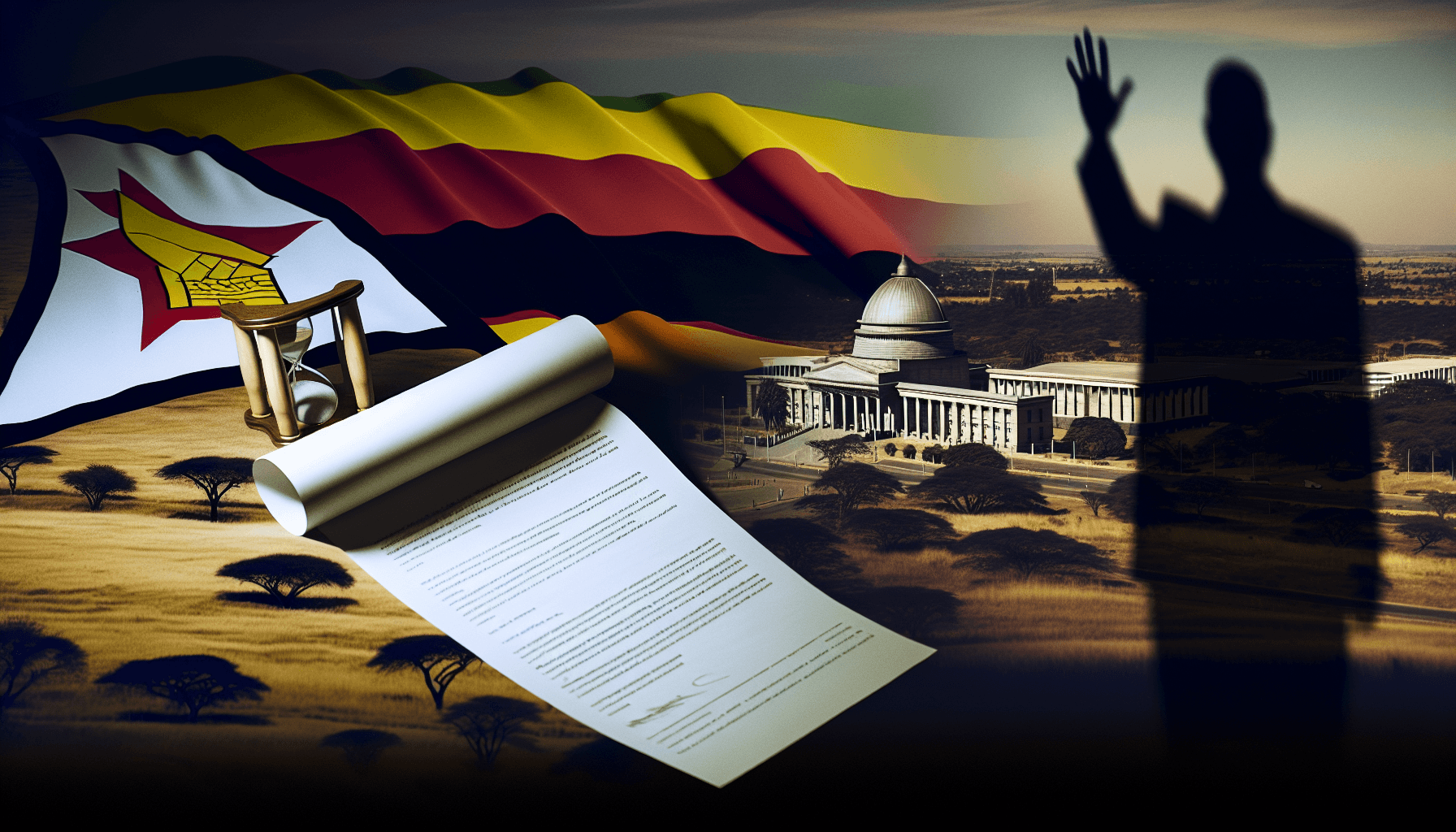
There is a pattern that serious observers of African politics recognise immediately. A long-ruling party, facing the constitutional end of its leader's tenure, discovers that the constitution is conveniently, suddenly, urgently in need of reform. The reforms are framed as modernisation. As stability. As continuity for development. The language is always reasonable. The intent is never in doubt.
Zimbabwe is living through that pattern right now. And the rest of Africa should be paying close attention, because what happens in Harare in the coming weeks will either confirm or challenge a dangerous continental trend.
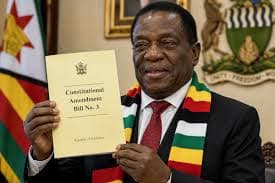
Zimbabwe's cabinet backed draft legislation in February 2026 that would change the constitution to extend presidential terms from five years to seven, allowing President Emmerson Mnangagwa, currently 83 years old, to stay in office until 2030. Among the other proposed changes is a provision that the president be elected by parliament rather than through a direct popular vote. The bill is formally known as the Constitution of Zimbabwe Amendment Bill No. 3 and is referred to everywhere as CAB3. It was gazetted on 16 February 2026.
Source: Al Jazeera, Zimbabwe Cabinet Approves Plan to Extend Mnangagwa's Rule Till 2030, 10 February 2026.
Let us be precise about what is actually being proposed here, because the language used by ZANU-PF obscures it deliberately.
What CAB3 Actually Does
The bill proposes extending presidential and parliamentary terms from five to seven years, thereby prolonging President Mnangagwa's tenure until 2030. It replaces direct presidential elections with parliamentary selection of the president. It consolidates executive control over key state institutions. It dissolves the Zimbabwe Gender Commission and the National Peace and Reconciliation Commission. And it transfers responsibility for the voters' roll from the Zimbabwe Electoral Commission to the Civil Registry, placing it firmly under executive control.
Source: D. Tinashe Hofisi, Executive Consolidation by Constitutional Disruption, ConstitutionNet, International IDEA, 19 March 2026.
Read that list again slowly. This is not electoral tinkering. This is the systematic dismantling of every institutional check that stands between a president and unchallenged power.
- Direct elections removed
- Independent voter roll management removed
- The Gender Commission removed
- The National Peace and Reconciliation Commission removed
- Senate independence compromised by ten presidential appointees
The president now effectively controls who runs against him, how constituencies are drawn, how votes are counted, and who sits in the upper house of parliament.
CAB3 strikes at the very heart of the separation of powers enshrined in Zimbabwe's 2013 Constitution. The proposed shift to parliamentary election of presidents is designed to strip citizens of direct electoral accountability.
Source: Mail and Guardian, Zimbabwe's Jarring Phantom Reform, April 2026.
The Consultation That Was Not a Consultation
Zimbabwe's constitution requires a 90-day public consultation before such amendments can be formally tabled in parliament. Public hearings ran from 30 March to 4 April 2026. Four days. One venue per administrative district. Each session is under three hours. Held on weekdays when most Zimbabweans are at work.
The Zimbabwe Human Rights Commission deployed monitoring teams across all provinces. The Commission recorded a serious pattern of rights violations at multiple venues, including instances where participants with divergent views were threatened, silenced and denied opportunities to contribute. In Mashonaland West, men armed with whips were deployed to vet participants.
Source: Zimbabwe Human Rights Commission, Press Statement, April 2026.
In Chitungwiza, men were reportedly assaulted on camera simply for voicing dissent, while civil society groups and eyewitnesses allege that some individuals vanished after opposing the bill.
Source: Mail and Guardian, April 2026.
This is not a consultation. This is a performance of consultation, designed to satisfy the constitutional requirement in form while violating it entirely in substance.
Written submissions to the Clerk of Parliament remain open until 17 May 2026. After that, the bill goes before parliament, where ZANU-PF holds a two-thirds supermajority in the National Assembly. Senior ZANU-PF figure Patrick Chinamasa has declared publicly that CAB3 is set to pass without resistance, claiming there is no meaningful opposition capable of halting it.
Source: ZimEye, No Opposition to Block CAB3, Boasts Chinamasa, 5 May 2026.
The Referendum Question
The most important legal argument being made against CAB3 is straightforward. Section 328 of Zimbabwe's constitution distinguishes between ordinary constitutional amendments and amendments to entrenched clauses, which protect basic rights, the structure of government, and the democratic process itself. Entrenched clauses require a national referendum. Opposition politicians and constitutional lawyers argue that removing the direct popular election of the president is exactly the kind of change that cannot be made without a public vote.
A referendum is a minimum, a non-negotiable aspect. There is a misconception that these so-called consultations can substitute for a referendum. They cannot. - Lovemore Madhuku, constitutional lawyer and opposition politician
Madhuku has brought a constitutional court case seeking to halt the amendment process entirely.
Source: NewsDay Zimbabwe, CAB3 Hearing Chaos Fuels Fresh Referendum Calls, April 2026.
Opposition politician David Coltart has stated that any amendment which has the effect of extending an incumbent's tenure should be subjected to a referendum, adding that ZANU-PF knows if that happens, they will fail, and so will do everything in their power to prevent a referendum from happening.
Source: Al Jazeera, 10 February 2026.
ZANU-PF's Justice Minister Ziyambi Ziyambi has dismissed the referendum calls and intends to push the bill through parliament without one. The government claims the changes will reduce what it calls election-related toxicity.
That phrase deserves scrutiny. Elections are toxic in Zimbabwe, not because of their frequency, but because of how ZANU-PF conducts them. The solution to election violence is not to remove elections. It is to stop the violence.
Who Is Saying No
The opposition to CAB3 is broad, credible and growing.
- The Zimbabwe Council of Churches has strongly opposed the bill, warning it would concentrate executive power and open the door to corruption and unchecked accumulation of wealth by those in power
- The Defend the Constitution Platform, led by opposition politician Jameson Timba, has boycotted all hearings and is organising public resistance
- Multiple legal advocacy groups have filed challenges in the Constitutional Court
- Retired military figures have raised concerns publicly
- A faction within ZANU-PF's own Politburo is reportedly mobilising against the bill internally
Source: NewsDay Live, ZCC Rejects CAB3, Labelling It a Threat to Democracy, 14 April 2026.
Source: My Zimbabwe News, Betrayal in Politburo, Secret ZANU-PF Faction Ready to Block Mnangagwa's 2030 Extension, 5 May 2026.
The Continental Pattern
This is not a uniquely Zimbabwean story.
- Uganda scrapped presidential term limits in 2005 and again in 2017
- Rwanda held a referendum in 2015 that extended Paul Kagame's rule
- Cameroon removed term limits in 2008, entrenching Paul Biya's decades-long presidency
- Zimbabwe in 2026 now follows the same path
Each of these cases demonstrates how legal frameworks are manipulated not to expand rights but to entrench ruling elites, bending constitutions into instruments of permanence rather than renewal.
Source: Mail and Guardian, April 2026.
What makes Zimbabwe's case particularly sharp is the origin of the 2013 constitution that CAB3 seeks to undermine. That constitution, with its two-term presidential limit, was specifically designed to prevent another Robert Mugabe. Emmerson Mnangagwa was among those who championed that design. He led the coup that removed Mugabe in November 2017, in part on the promise that the new Zimbabwe would respect constitutional limits on power. He is now seeking to dismantle those same limits to justify his own continuation.
President Mnangagwa pledged at his 2018 inauguration to respect the 2013 Constitution and not serve more than the two five-year terms it permits. The bill's transitional provisions would extend his current term from five to seven years.
Source: ConstitutionNet, International IDEA, 19 March 2026.
The word for that is not reform. The word is betrayal.
What Zimbabweans at Home and Abroad Should Do Right Now
Written submissions to the Clerk of Parliament remain open until 17 May 2026. Every Zimbabwean, including the estimated three to five million living in South Africa, the United Kingdom, Australia, the United States and across Europe, has the right to submit a written view. The address is the Clerk of Parliament, Parliament of Zimbabwe, Harare.
This matters. The diaspora is large, educated and deeply invested in Zimbabwe's future. Many left precisely because of the governance failures CAB3 would entrench permanently. Their voice belongs in this process.
The African Union met with Zimbabwe's lawmakers on 2 April 2026. Its position emphasising sovereignty and the right to determine governance structures has been interpreted by some as tacit approval. That interpretation should be challenged. Sovereignty does not mean immunity from scrutiny. The African Charter on Democracy, Elections and Governance, which Zimbabwe has signed, requires that constitutional changes of this magnitude be subject to genuine popular participation.
The vote is coming. The outcome in parliament is likely, though not certain. What happens after, in the courts, in the streets, in the diaspora and at the African Union, will determine whether CAB3 is the last act of a democratic constitution or the first act of something far more permanent.
Zimbabwe has been here before. In 2017, it was said the coup was a correction. In 2026, it is being told that the constitution is the problem. Both times, the answer to the same question is identical: who benefits?
Not Zimbabwe. Not Zimbabweans. One man. And the system was built to keep him there.
Sources and References
- Al Jazeera, Zimbabwe Cabinet Approves Plan to Extend Mnangagwa's Rule Till 2030, 10 February 2026
- Al Jazeera, Zimbabweans Fear Planned Constitutional Change Will Kill Political Choice, 2 April 2026
- D. Tinashe Hofisi, Executive Consolidation by Constitutional Disruption, ConstitutionNet, International IDEA, 19 March 2026
- Human Rights Watch, Zimbabwe Violence and Intimidation Against Opponents of Presidential Term Extension, 10 March 2026
- Zimbabwe Human Rights Commission, Press Statement on CAB3 Hearings, April 2026
- Mail and Guardian, Zimbabwe's Jarring Phantom Reform, April 2026
- NewsDay Zimbabwe, CAB3 Hearing Chaos Fuels Fresh Referendum Calls, April 2026
- NewsDay Live, ZCC Rejects CAB3, Labelling It a Threat to Democracy, 14 April 2026
- Bloomsbury Intelligence and Security Institute, Reshaping Zimbabwe's Government Structure, Sarah Ambrose, 22 April 2026
- ZimEye, No Opposition to Block CAB3, Boasts Chinamasa, 5 May 2026
- My Zimbabwe News, Betrayal in Politburo, 5 May 2026
- EWN, ZANU-PF Defends Constitutional Amendment as Critics Call It Third Term by Stealth, 27 February 2026
- African Charter on Democracy, Elections and Governance, African Union
By Chrispen Nkosi
Shared 0 times
Editorial note: This article represents the opinion and analysis of the author and does not constitute verified fact. Ground View News strives for accuracy and publishes corrections when errors are identified. View our editorial policy · Editorial disclaimer